
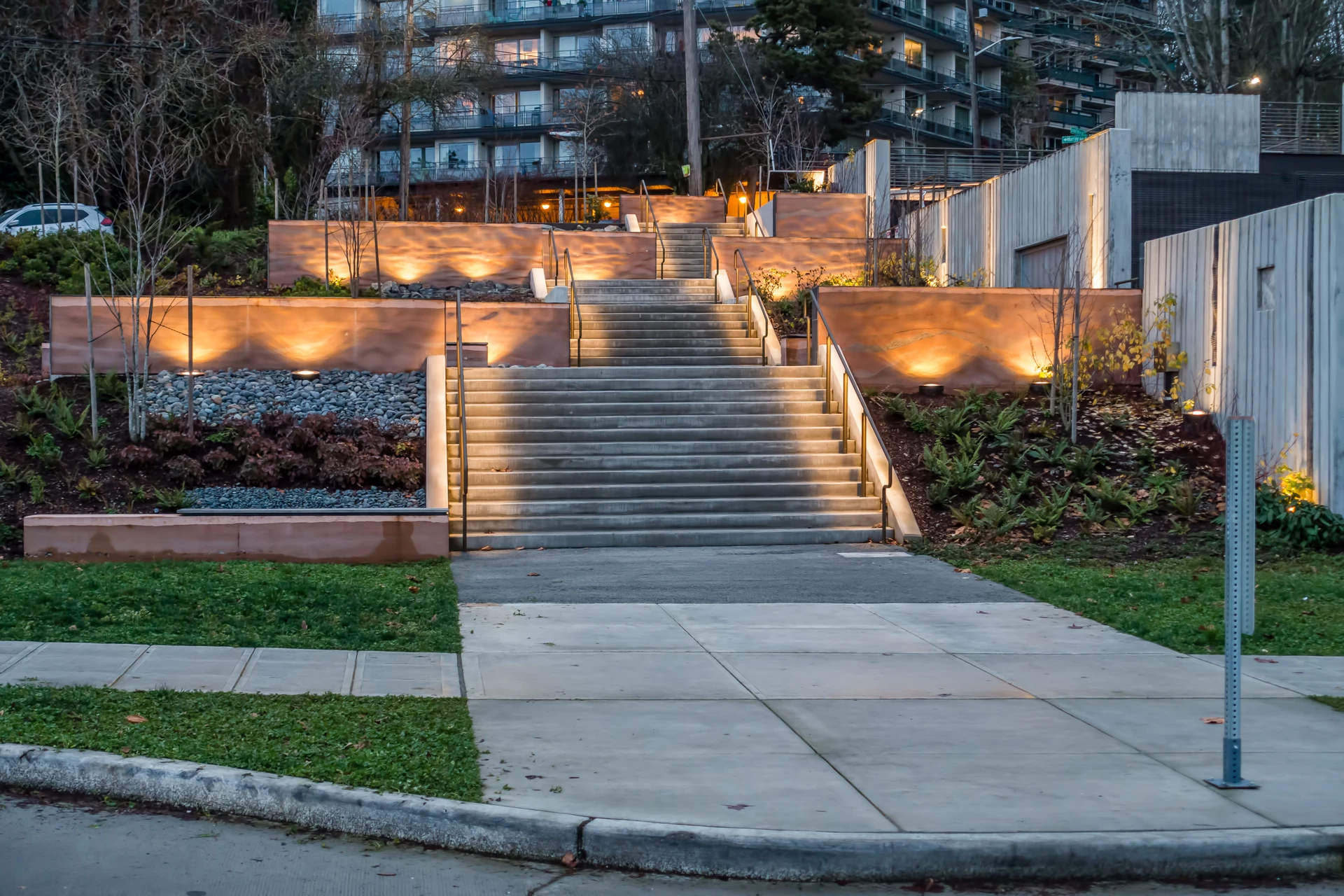
Retaining Wall Lighting Ideas & LED Hardscape Guide
Retaining Wall and Hardscape Lighting Ideas for Outdoor Spaces
So you dropped a bunch of cash on a nice stone or concrete retaining wall. Looks great during the day. But the second the sun dips? Boom. Giant black blob in your yard. It just kills the vibe.
The right lighting fixes all of that. It turns a boring slab of concrete into something you actually want to look at while you're sipping a beer on the patio.
Whether you’re dealing with a massive stone wall holding back a hill, or just a little raised garden bed, you can make it look awesome at night. The secret? Hide the fixtures. You don't want to blind your guests. You just want a soft, easy glow that makes the stone pop.
Let’s look at some tricks to pull this off, plus a few tips so you don't waste your money on the wrong gear.
Wait, what is retaining wall lighting exactly?
Look, it’s just lighting meant to show off the wall. But regular outdoor floodlights are garbage for this. They blast light everywhere, blind you, and make your yard look like a parking lot.
Good retaining wall lights are designed to hide. They shoot light down the face of the wall. This makes the texture pop without giving you a migraine. If you do it right, it improves safety around steps, highlights the masonry, and makes the whole space feel way more expensive than it is.
What about LED hardscape lighting?
Hardscape lighting just means lights built into the actual structure. Think steps, stone columns, seating walls, and patios.
They are usually tiny and low-profile. My favorite style is a thin LED strip tucked right under the capstone of your wall. You literally can't see the fixture, just the light spilling out. LEDs are perfect for this because they use basically zero power and you can get them in really nice warm colors that make natural stone look amazing.
8 Lighting Ideas That Actually Work
-
Tuck lights under the capstones
Best trick in the book. You mount slim LEDs right under the capstone overhang. The cap hides the fixture, and the light washes down the wall. It brings out the texture in stacked stone or brick. Just space them out evenly. Don't put them so close together that it looks like a runway.
Try this: The Universal Lighting 12V 7-Inch Hardscape Light. It's slim, bronze, gives off a warm 2800K glow, and doesn't stick out like a sore thumb. -
Uplight natural stone walls
Natural stone is bumpy and has cool edges. If you put small accent lights on the ground near the base pointing up, it creates shadows that make the stone look deep and textured. Adjustable spotlights are best here so you can aim them exactly where you want.
Try this: The Kichler 12V Landscape LED Accent Kit. -
Glow up your patio seating walls
Low walls make great places to sit around a fire pit. Put some lights under the top of the wall to make a cozy vibe. Make sure the light points down. Nobody wants a bulb shining straight into their eyes while they're trying to relax. Warm white lights (2700K to 3000K) look amazing next to wood furniture. -
Don't forget the stairs
If your wall has steps, light them. Nobody wants a broken ankle after a few drinks. You can put small lights under the stair overhangs or in the risers. Just make sure the walking surface is lit, but the bulb itself isn't visible. Pay extra attention to the top and bottom steps. -
Define those raised garden beds
If you built a raised bed out of brick or stone, throw some lights under the top lip. It makes the bed look separated from the rest of the yard. You can also mix in a few tiny uplights for tall grasses nearby. Just be careful not to blast light into your neighbor's kitchen window. -
Go modern with even spacing
If your wall is smooth concrete or modern rectangular stone, you want a clean look. Space low-voltage lights at exact intervals. You don't want dramatic pools of light. You want an even wash that shows off the clean lines. Make sure all your lights are the exact same color temperature. Mixing warm and cool light looks terrible. -
Mix wall lights with landscape lights
You don't just have to light the wall. Combine under-cap lights with a few spotlights pointed at trees or bushes. The wall lights anchor the patio, and the spotlights add depth to the yard. Put them on different switches if you can afford it. That way you can change the vibe depending on the party. -
Light up stone columns and outdoor kitchens
You can put hardscape lights on stone pillars or the walls of your outdoor kitchen. It makes the masonry look really impressive. But if you're lighting a grill area, you need actual task lighting for cooking. And keep the lights away from places where they'll get blasted with grease or heat.
How to pick the right lights
Don't just buy the first thing you see. Think about these things first:
Color Temp: Warm light (2200K–2700K) is super cozy for patios. Standard warm white (2700K–3000K) makes stone and brick look natural. Cooler white (3500K–4000K) is okay for modern stuff, but it can look a little harsh outside.
Beam Angle: A narrow beam is good for pointing at one specific thing. A wide beam spreads light out. Under-cap lights usually need a wider spread so you don't get dark gaps.
Materials: It's outside. It's going to rain and snow. Get fixtures that are wet-rated and made of stuff that won't rust.
Glare: More lumens isn't always better. A little bit of light goes a long way outside. Hide the bulbs so you don't get blinded.
Why low voltage is the way to go
Low voltage (12V) systems are awesome for DIYers. You just plug a transformer into your outdoor outlet, and it steps the power down. Then you run a cable around your yard. It's safe, and you can easily move things around later.
LEDs barely use any power. The Universal LL4407BZ uses 1.5 watts. If you have six of them, that's only 9 watts total. You can leave them on all night and barely notice it on your electric bill. Plus, they last forever. That Universal light is rated for 50,000 hours. You'll probably replace the wall before the lights die.
How many lights do you need?
There's no magic number. It depends on how bright the lights are and how tall the wall is.
A good rule of thumb for standard under-cap lights is to space them 4 to 7 feet apart.
If you have a 10-foot wall, try 2 or 3 lights. For a 20-footer, maybe 3 to 5. A 30-foot wall usually needs 5 to 7.
But honestly? The best thing to do is buy a few, lay them on the ground at night, and see how it looks before you mount them.
How to install them (without messing up your wall)
The absolute easiest time to do this is when you are actually building the wall, before the caps go on. But you can retrofit them too if you're careful.
- Plan it out: Measure everything. Mark where the lights will go. Don't put them right where a downspout or a big plant will block the light.
- Get a good transformer: Add up the wattage of all your lights and make sure your transformer can handle it. Leave a little wiggle room.
- Hide the wires: If you're building new, run the wire behind the wall. If it's an old wall, don't cut into structural stone. Try to tuck the wire under mulch.
- Mount the fixtures: Follow the instructions. Make sure the bracket is tight.
- Waterproof the connections: Use those little silicone-filled wire nuts that come with the lights. Water in the connections is the #1 reason these things fail.
- Wait for dark: Turn them on at night and look at them from the patio. Move things around if you need to.
Don't make these mistakes
- Don't overdo it: Too many lights makes it look like a casino. Less is more.
- Don't mix colors: Keep all your bulbs the same color temperature.
- Don't ignore glare: If you can see the actual LED bulb, you did it wrong.
- Don't use indoor lights: They will die in a week.
- Don't skip the transformer math: If you plug too many lights into a small transformer, they will all dim and flicker.
FAQ
Can I put lights under my existing caps?
Yeah, usually. If there's an overhang, you can buy retrofit brackets. It's a bit more of a pain than doing it during the build, but totally doable.
Will rain ruin my lights?
Not if you buy wet-rated fixtures. Just make sure you waterproof the wire splices really well.
What's the difference between hardscape and landscape lights?
Hardscape lights are built into the wall or steps. Landscape lights usually sit in the dirt or mulch.
The Bottom Line
Good lighting makes your yard look expensive. You don't need to light up the whole wall. Just pick a few key spots, use warm light, and hide the fixtures.
If you want that clean under-cap look, check out the Universal Lighting 12V 7-Inch LED Hardscape Light. If you want to highlight a specific tree or a textured stone face, grab a Kichler 12V Landscape LED Accent Kit Light.
You can find both of these and plenty of other options in the outdoor landscape lighting collection at Cans & Fans.


