
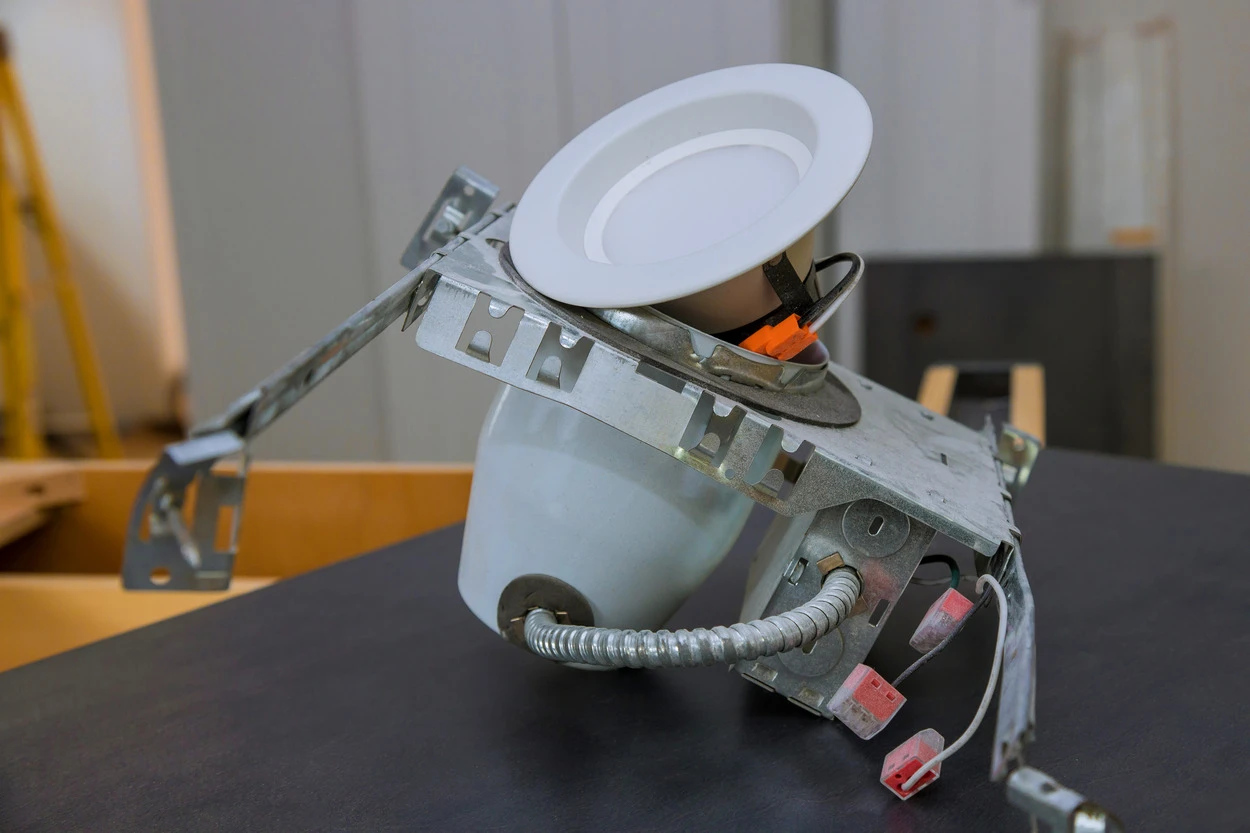
Canless vs Retrofit Recessed Lighting: Which Is Better?
Okay, real talk: choosing recessed lighting isn't exactly the most thrilling home project out there. But man, when you get it right, it changes everything about a room. The way light spreads, the mood, even how big the space feels. So whether you're starting from scratch, gutting an old kitchen, or just sick of those buzzing, dim relics in your ceiling, you've probably hit the classic fork in the road: canless or retrofit?
Here's the good news: both have gotten a serious upgrade thanks to LEDs. We're talking way less electricity, bulbs that don't conk out every other year, nicer color tones, and trims that actually look sleek instead of clunky. But they're not the same animal. Each fits a totally different scenario.
Retrofit LED downlights? They're basically designed for folks who already have those old-school recessed cans up there. If that's you, congrats, you've got an easy path forward. Canless LED ceiling lights, though, ditch that bulky metal housing entirely. They're thin, flexible, and perfect when you're working with shallow ceilings or starting fresh.
So What Are Canless LED Recessed Lights?
You might hear people call them wafer lights or slim LEDs. Basically, they're little pancakes of light that don't need that big metal can behind the drywall.
Instead of wrestling with a separate housing, you get one compact unit that has the light source and driver built right in. You hook it up to a junction box, cut a hole, pop it in, and those spring clips hold it snug against the ceiling. Done.
Old-school recessed lighting? That usually meant three separate pieces:
- The housing (that giant tin can)
- The trim ring
- The bulb or LED module
Canless cuts all that clutter into one tidy package. No hunting for compatible parts.
And because they're so shallow like, seriously thin they're lifesavers in tricky spots:
- Low ceilings where every inch counts
- Apartments where you can't tear apart the structure
- Basement makeovers with beams and pipes everywhere
- Anywhere insulation or obstructions get in the way
- Modern homes where you want the light to disappear, not dominate
Honestly, that's why they've blown up lately. You can put recessed lighting almost anywhere without needing a foot of empty space above the ceiling. Game changer.
And What About Retrofit LED Recessed Lights?
These are the "upgrade without the headache" option. They're made to slide right into your existing recessed cans; no gutting required.
You just yank out the old bulb and trim, then plug in the new LED module inside the can that's already there. That's it.
If your place already has those 4-, 5-, or 6-inch cans, and the wiring is still solid, retrofitting is a no-brainer. You're not touching the ceiling, not rerouting wires, not patching drywall.
What do you get out of it?
- Instant brightness boost
- Lower electric bills (you'll actually notice)
- Way better color rendering no more sickly yellow or harsh blue
- Fresher look without the construction mess
- Fewer bulb changes (goodbye, stepladder)
For anyone sitting on a house full of old recessed lights, retrofitting is probably the quickest win you'll ever get. Minimal effort, maximum payoff.
Canless vs Retrofit: The Real Differences
When you strip it down, the main difference is all about what you're starting with and how much work you want to do.
|
Feature |
Canless LED |
Retrofit LED |
|
Needs existing can? |
Nope |
Yep |
|
Best for |
New builds, remodels |
Existing setups |
|
Installation style |
Into fresh ceiling |
Into old can |
|
Ceiling depth needed |
Barely any |
Needs that can depth |
|
Look |
Super slim, modern |
Classic recessed vibe |
|
Flexibility |
You can put 'em anywhere |
Limited by can locations |
|
When it dies |
Replace whole fixture |
Usually just swap module |
Which One's Less of a Hassle to Install?
Canless installation:
If you've got a bare ceiling in new construction or a full gut, canless is actually simpler because you skip mounting those heavy housings.
Steps are pretty straightforward:
- Trace and cut the hole.
- Mount the little junction box.
- Connect your wires.
- Push the fixture up and let the springs do their thing.
Because the whole thing is so shallow, you can put them in spots where a traditional can would never fit. That's why builders love them for new homes, ceiling replacements, and tight attic spaces.
Retrofit installation:
If your cans are already there, retrofitting is almost embarrassingly easy.
You'll:
- Unscrew and pull out the old bulb.
- Take off the trim ring.
- Plug in the new LED adapter.
- Click the new module into place.
No new holes. No drywall dust. No patching. Just better light in about 15 minutes per fixture.
For most homeowners, this is the path of least resistance and least mess.
What About New Construction?
If you're building from the ground up, I'd lean canless every time.
Why? Because you're not stuck with someone else's layout. You can put lights exactly where you want them over the island, above the art, along that dark hallway.
Here's why canless wins for new builds:
- You've got total freedom.
No big housing means you can place fixtures in weird spots that used to be off-limits. - It looks cleaner.
That ultra-thin profile blends into the ceiling like it's not even there. No bulky rings, no shadows. - Electricians move faster.
They can pop these in way quicker than wrestling with metal cans. Less labor time = happier wallet. - Low ceilings aren't a problem.
Got beams, ductwork, or shallow trusses? Canless laughs at those.
If I were building today, I wouldn't even think about old-school housings. Canless is just more future-proof.
And for Remodeling? Depends.
Here's where you've got to be honest about your situation.
Go retrofit if:
- You already have cans that work
- You want a fast, cheap upgrade
- You're not in the mood for drywall repair
- Your current layout actually works fine
Retrofit lets you modernize without changing a thing structurally. Quick in, quick out.
Go canless if:
- You're tearing out ceilings anyway
- You hate your current layout and want to redesign
- Your old cans are rusted, busted, or just plain ugly
- You've got shallow joists and no room for cans
A remodel gives you the perfect excuse to ditch the past and start fresh. Don't waste it.
But Are Those Skinny Canless Lights Bright Enough?
I get it; they look so thin you wonder if they're just glow sticks. But trust me, modern slim LEDs can pump out serious light while sipping power.
Brightness comes down to:
- Lumens (the actual light output)
- Room size and ceiling height
- Beam spread
- How many fixtures you install
- Color temperature (warm vs cool)
Good canless fixtures can easily handle kitchens, living rooms, bedrooms, offices, even hallways. Just don't under-light your space. More fixtures on a dimmer is always better than too few blazing at full blast.
Costs: Which One Saves You More?
If you've already got cans, retrofitting is cheaper upfront you're just buying the LED module.
For new projects, canless might actually save you money because you're not buying separate housings. But your total bill depends on:
- How many lights you need
- How much electrical work is involved
- Whether you're paying an electrician or DIYing
- Fixture quality (cheap isn't always cheap in the long run)
Remember: the cheapest fixture isn't always the best deal. A good LED system will cut your energy use and save you from climbing ladders to change bulbs for a decade. Spend a little more now, thank yourself later.
Energy and Lifespan, Both Are Great
Either way, you're leaving incandescent and halogen in the dust.
You'll get:
- Lower power bills (seriously, check the difference)
- Way less heat (your AC will thank you)
- Bulbs that last forever (okay, tens of thousands of hours)
- The ability to choose your perfect white tone
One catch: with canless, when the LED eventually dies, you replace the whole fixture. With retrofit, you might be able to just swap the module. Not a dealbreaker, but worth knowing.
A Few Products I'd Actually Recommend
ELCO Canless 6" Ultra Slim LED Round Panel Light
If you want that clean, low-profile look, this one's a solid bet. Super thin, multiple color temps, and it disappears into the ceiling. Perfect for modern homes.
Westgate 12" Square LED Ultra Slim Canless Light
Got a big room or a contemporary space? This square one throws light wide and looks architectural. Great for living rooms or even commercial spots.
ELCO 12" Square LED Retrofit With 5 CCT Switch
Upgrading old cans? This retrofit lets you dial in the exact color temperature you want warm, cool, or in between. Nice little feature to have.
Alright, So Which One Should You Actually Choose?
Here's my honest take there's no universal right answer. It's all about your starting point.
Go canless if:
- You're building new or doing major renovations
- You need something super thin
- You have limited ceiling space
- You want that modern, minimalist look
Go retrofit if:
- You've already got cans installed
- You want a quick, cheap upgrade
- You don't want to touch your ceiling
- You're replacing old halogen or incandescent fixtures
Both are great. They just solve different puzzles.
For fresh installs, canless gives you freedom and a clean finish. For existing homes, retrofit is practical, affordable, and nearly painless.
FAQs
What's the real difference between canless and retrofit?
Canless goes into a fresh ceiling without a housing. Retrofit slides into an existing can.
Are canless lights better than traditional cans?
For new builds, often yes easier install, slimmer profile. But for upgrades, retrofits make more sense.
Which is easier to install?
New install? Canless. Existing cans? Retrofit. Depends where you're starting.
Do canless lights need a junction box?
Yep most come with a small one that connects to your wiring.
Are slim LEDs bright enough?
Absolutely, if you pick the right lumens and spacing.
Can I put canless lights in an existing ceiling?
Sure, but you'll cut new holes and add boxes. Retrofits are easier if cans are there.
Which is better for remodeling?
Simple upgrades = retrofit. Full redesign = canless.
How long do they last?
Many thousands of hours it just depends on quality and heat.
Are they dimmable?
Most are, but check your dimmer compatibility first.
Are retrofits cheaper?
Usually, if you already have cans. But canless can be a better value for new projects.
At the end of the day, you're not choosing between "good" and "bad." You're choosing between "right for your situation" and "wrong for your situation." Think about your ceiling, your budget, and how much work you actually want to do. Get that right, and you'll have great light, lower bills, and a room that feels completely different in the best way.


