
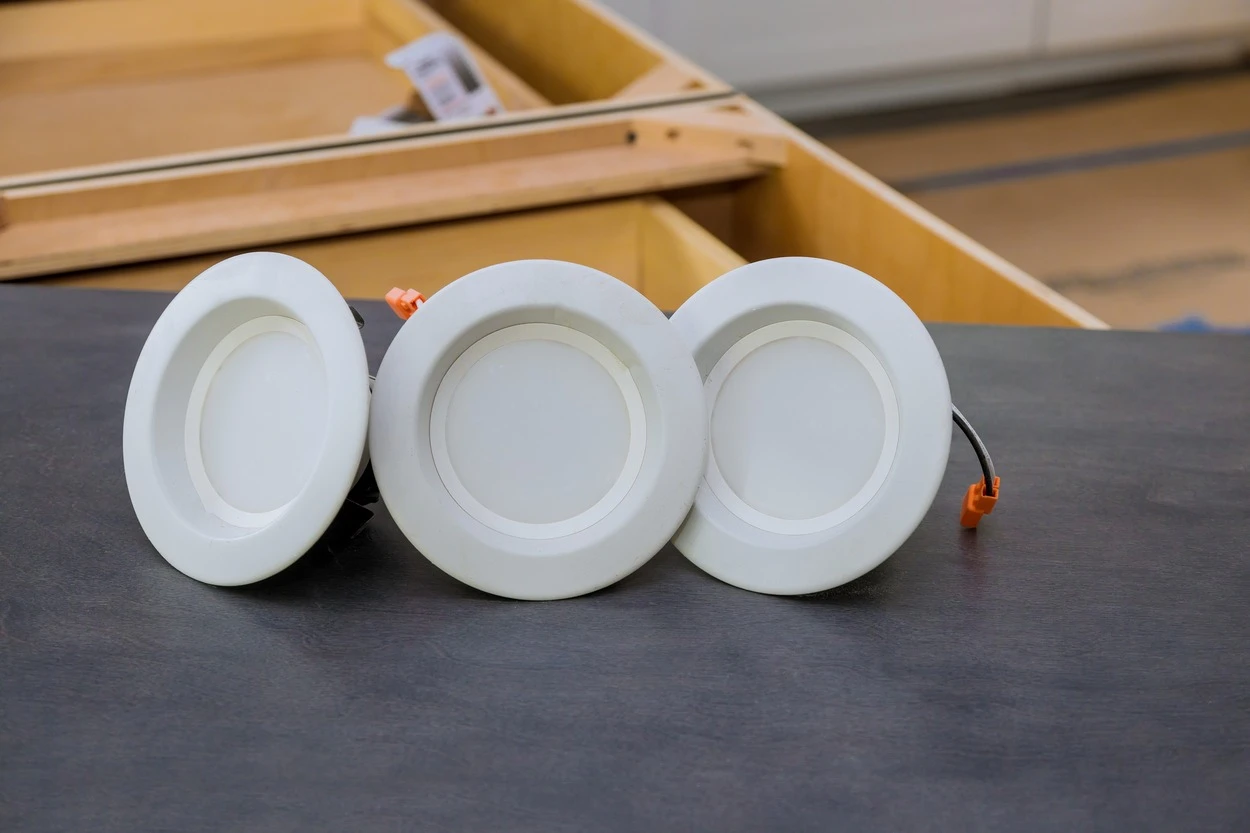
Best Retrofit LED Downlights for Home Renovations
So you're looking at your ceiling right now, aren't you? Those old recessed lights that came with the house, probably from the 90s or early 2000s. They work fine, but they're dated. Maybe they buzz a little. Maybe they make the room look dingy. And you're thinking is there a way to fix this without tearing my ceiling apart?
Good news. There usually is.
If you've already got recessed cans up there, you don't have to gut everything. Just swapping out the old lamps and trims for LED retrofit downlights can make a world of difference. Better light quality. Lower energy bills. Smoother dimming. A cleaner, more modern look. And the best part? You don't need to rip out the housing.
I've seen this work wonders in kitchens, living rooms, bedrooms, hallways basically anywhere those old cans are still structurally sound.
But here's the thing that catches people off guard. And I mean really catches them. Not every retrofit fits every housing. You can't just grab whatever looks good on Amazon and hope for the best. You need to think about size, housing type, socket configuration, ceiling angle, dimmer compatibility, color temperature, and how much light you actually need.
I've made that mistake before. Bought a bunch of retrofits that looked perfect, got home, and they didn't fit. Total waste of time and money.
So let's talk about what actually matters.
Alright, So What Exactly Are Retrofit LED Downlights?
Think of them as upgrade kits for your existing recessed light housings. Instead of yanking the whole can out of the ceiling, which, trust me, is a messy job you don't want to deal with, you just remove the old lamp and trim and pop the new LED module right into the housing that's already there.
Some retrofits screw right into the existing socket. Others use special connectors. Some come with various mounting hardware depending on the situation.
The big advantage here is obvious. You're not dealing with drywall repair, repainting, or any of that nonsense. You keep your existing ceiling cutout intact. That alone is worth the price of admission if you're working in a finished room.
These things come in all shapes and sizes. 4-inch, 5-inch, 6-inch, even bigger. Round ones, square ones, baffle styles, reflectors, adjustable models, and those super-slim wafer designs that look really sleek.
Just remember and I can't stress this enough retrofit doesn't mean one-size-fits-all. Compatibility is everything.
Why Even Bother With This?
Let's be honest with each other. Those old incandescent or halogen bulbs are terrible. They eat electricity like crazy, they pump out heat, and you're constantly changing them. My wife used to joke that changing lightbulbs was my second job.
LEDs fix all of that.
The Department of Energy says LEDs use at least 75% less energy than incandescent bulbs and last way longer. I've seen that play out in my own house. My electric bill dropped noticeably after I switched.
You'll save money on electricity.
This is the main reason people make the switch, and it makes sense. A traditional recessed fixture with a high-wattage bulb burns way more power than an LED replacement. And if you've got multiple fixtures? The savings add up fast. Especially in rooms where the lights stay on for hours every day.
Now, I should be upfront with you your actual savings depend on what you're replacing, how many hours you run them, and what you pay for electricity. So don't just assume a random number. Run the math yourself. It's worth it.
You'll change bulbs maybe once a decade.
Quality LED retrofits are rated for tens of thousands of hours. The ELCO 8-inch Square Retrofit? 50,000 hours. The RAB Wafer Retrofit? Also 50,000 hours.
What does that mean in real life? Fewer trips up the ladder. Fewer bulbs to buy. Less frustration. I've got LEDs in my kitchen that I installed six years ago and they're still going strong.
The light actually looks better.
This was the biggest surprise for me. Modern LED downlights give you way more control over how your room feels. Pay attention to these specs:
- Lumens (how bright it is)
- CRI (how accurate colors look)
- Color temperature (warm or cool)
- Beam spread
- Glare control
- How well it dims
If you've got a kitchen or bathroom, high CRI makes a real difference. You'll notice it when you're cooking, putting on makeup, or just trying to see things properly.
You can pick your vibe.
Some retrofits let you choose the color temperature during installation. That's huge because if you pick wrong, you're not stuck with it. The RAB Wafer Retrofit has options at 2700K, 3000K, 3500K, 4000K, and 5000K. You can match existing lights or create whatever mood you're going for.
How to Actually Pick the Right One
Choosing the right retrofit isn't rocket science, but you do need to pay attention to a few things.
Measure your existing cans first.
Figure out what size you've got. 4-inch, 5-inch, or 6-inch are the most common, but there are others.
And don't just measure the trim you can see from the floor. That's a mistake I've seen people make over and over. You need to know the housing itself, the mounting system, and the socket arrangement. If you can find the housing manufacturer and model number, that's gold.
Double-check compatibility.
This is the step people skip, and then they regret it.
Some retrofits are made for specific housings. Others work with a wider range. For example, the Nora 6-inch Super Slope is specifically for sloped ceilings. It handles pitches from 7/12 to 12/12. They specify it works with most 6-inch IC and non-IC super-slope housings from Nora and other brands.
Moral of the story? Read the manufacturer's compatibility info. Don't assume.
Pay attention to lumens, not watts.
This is a common trap. Watts tell you how much electricity it uses. Lumens tell you how much light it actually puts out.
For your renovation, compare the lumen output of your current lights to the LED retrofit. The ELCO 8-inch Square Retrofit, for example, puts out about 1,460 to 1,520 lumens from 18 watts.
You want a good balance. Not too dim, not blindingly bright. Just right for the space.
Think about color temperature.
Measured in Kelvin. Here's a rough guide:
- 2700K: Warm and cozy, like the old bulbs
- 3000K: Warm but a bit cleaner
- 3500K: Neutral
- 4000K: Crisp and white
- 5000K: Daylight, very cool
For most homes, 2700K or 3000K feels comfortable and inviting. Kitchens and modern spaces might work better with 3000K to 4000K.
Honestly, there's no right answer here. It depends on the room, the colors on your walls, how much natural light you get, and your personal taste.
Check the CRI.
CRI tells you how accurately colors look under the light. Higher is better.
For homes, you want 90 or above. The ELCO 8-inch Square Retrofit is 93+ CRI. The RAB Wafer Retrofit is over 90. Both are solid.
Don't ignore dimming.
If you've got dimmer switches, make sure the LED plays nice with them.
Some work with Triac, some with ELV, and compatibility varies. Nora specifies Triac/ELV dimming for their Super Slope Retrofit. ELCO does the same for theirs.
If you get flickering or buzzing after installation, check the dimmer compatibility list. It's probably not the LED's fault.
Three Retrofit Options Worth Looking At
Here are three that cover common situations.
Nora Lighting 6" Super Slope LED Retrofit Reflector
Got a sloped ceiling? This one's for you. A flat-ceiling retrofit won't work.
The NLRS-6S11 handles pitches from 7/12 to 12/12. It puts out up to 1,200 lumens from 16 watts with 90+ CRI and options for 2700K, 3000K, or 4000K. Comes with a medium-base socket adapter and works with compatible housings.
If you've got steep ceilings and want to keep your existing setup, this is a strong option.
ELCO 8" Square LED Retrofit Insert
Not all recessed lights are round. If you've got existing 8-inch square housings, this is what you want.
The ELCO EL881CT5W uses 18 watts and delivers about 1,460 to 1,520 lumens. Selectable 3000K, 3500K, or 4000K with 93+ CRI. Works with compatible square housings, including ELCO's own. 50,000-hour life and Triac/ELV dimming.
Perfect if you want to keep a large square ceiling opening but upgrade the light.
This one's different. Low-profile wafer design that retrofits into existing housings.
Available in 4-inch and 6-inch sizes with selectable 2700K, 3000K, 3500K, 4000K, and 5000K. Over 90 CRI, 110-degree beam angle, dims to 10% on compatible systems. ENERGY STAR certified.
If you want flexibility in size and color temperature, this is worth checking out.
Are Retrofit LEDs Better Than Replacing the Whole Housing?
Honestly? It depends.
If your existing housing is in good shape and compatible, a retrofit is a no-brainer. Easy upgrade, no drywall work.
But if the housing is damaged, incompatible, or poorly positioned, replacing it might make more sense. You'll have to open up the ceiling, but sometimes that's the right call.
Check compatibility first. That's my advice.
Switching From Halogen to LED
This is one of the easiest upgrades you can do.
Halogen lamps throw off heat like crazy and drink power. LEDs give you the same or better light with way less juice.
Watch out for the dimmer. Your existing dimmer might not work with LEDs. If you get flickering or buzzing, check the manufacturer's compatibility list. You might need to swap out the dimmer too.
And make sure the retrofit is approved for your housing and ceiling conditions.
How Much Energy Will You Actually Save?
Let me give you an example.
Say you've got ten recessed lights with 50W bulbs, running four hours a day:
10 × 50W × 4 hours = 2,000Wh, or 2kWh per day.
Swap them for 10W LED retrofits:
10 × 10W × 4 hours = 400Wh, or 0.4kWh per day.
That's an 80% reduction.
Your actual numbers will depend on your setup, but you get the idea. It adds up.
Do You Need an Electrician?
For a simple swap? Probably not. You can do it yourself.
But if you're modifying wiring, replacing housings, or dealing with anything unusual, call a pro. It's not worth the risk.
Always turn off the circuit and verify the power is off before you start. Seriously. Don't skip this.
Common Mistakes I've Seen
Buying based only on trim size. Doesn't work. Check the housing.
Ignoring the dimmer. Dimmable doesn't mean compatible with your dimmer.
Picking color temp without thinking. 5000K in a living room? Harsh. Think about the room.
Forgetting about ceiling slope. Standard downlights look wrong on steep ceilings.
Assuming everything is IC-rated. If insulation touches the housing, you need IC-rated stuff.
FAQs
Best retrofit lights? Depends. Nora for sloped ceilings. ELCO for square housings. RAB for flexibility.
Worth upgrading from halogen? Yes. Lower bills, longer life, better light.
How to know size? Measure the housing, not just the trim.
Can any retrofit fit any housing? No. Check compatibility.
Energy savings? At least 75% less than incandescent. Depends on your usage.
Lifespan? 50,000 hours for many quality products.
Need an electrician? If wiring is involved, yes.
Dimmable? Many are, but check compatibility.
Best color temp? 2700K-3000K for most homes. Depends on the room.
Retrofit vs canless? Retrofit works with existing housing. Canless doesn't need one.
Wrapping Up
The right retrofit isn't the brightest or the cheapest. It's the one that fits your housing, gives you the light you need, works with your dimmers, and looks good in your space.
For steep ceilings, the Nora Super Slope is great. For square housings, the ELCO Square Retrofit is purpose-built. For flexibility, the RAB Wafer Retrofit is worth a look.
Before you buy, check the dimensions, compatibility, IC rating, electrical requirements, dimmer compatibility, and color temperature.
Get it right, and you'll have better light, lower bills, and a cleaner look without tearing your ceiling apart.


