
What Are Well Lights? Uses, Installation & Buying Guide
What Are Well Lights and When Should You Use Them?
Picture this: a row of mature oak trees glowing softly from below, their canopies lit like something out of a private estate at dusk. No visible fixture, no glare, no clutter along the path. Just light, seemingly rising straight out of the earth. That effect almost always comes from one fixture type, the well light.
If you're knee-deep in planning an outdoor lighting project and keep coming across these mysterious little fixtures that disappear into the ground, you've come to the right place. This guide walks you through everything you need to know about well lights, what they are, how they work, where to put them, and how to pick the right ones for your yard.
What Exactly Are Well Lights?
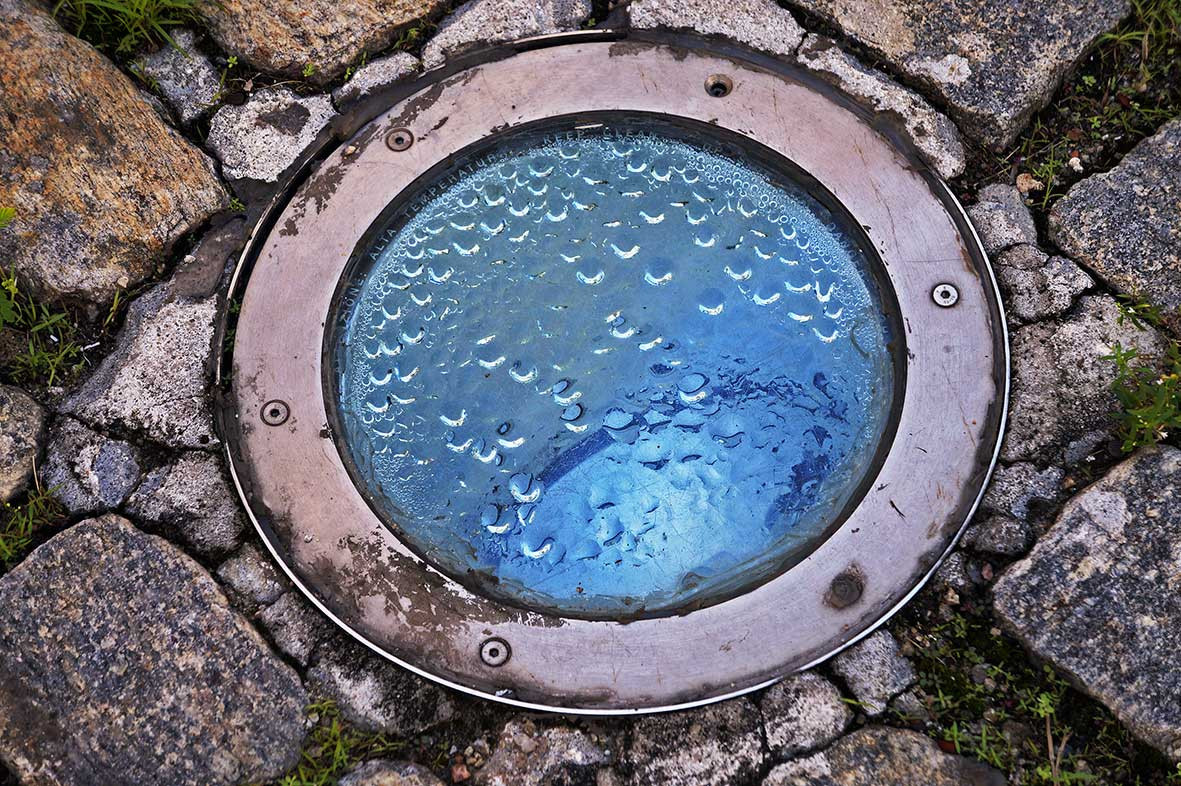
Think of a well light as the ninja of the landscape lighting world. It's installed flush with the ground, with the bulb and housing sitting below grade inside a metal or composite sleeve. All you see at the surface level is a protective cover and the lens; the rest of the fixture stays hidden in a recessed "well" in the soil or hardscape.
This in-ground design is what really sets well lights apart from nearly every other outdoor fixture out there. Path lights, spotlights, and bollards all sit above ground and are visible as objects in the landscape. A well light, on the other hand, is built to vanish, throwing a clean, upward beam of light onto whatever sits above it: a tree trunk, a stone facade, a flagpole, or an architectural column, without the fixture itself drawing any attention.
And because the housing is buried, well lights are also one of the more weatherproof and tamper-resistant fixture types available. They're a popular choice for high-traffic areas, mowed lawns, and driveways where an above-ground fixture would eventually get knocked over or run over.
How Do Well Lights Actually Work?
The mechanics are pretty straightforward. A cylindrical housing usually made of brass, copper, or aluminum gets buried in the ground so its rim sits flush with the surrounding grade. Inside that housing sits the bulb and socket, wired to a low-voltage cable that runs underground back to a transformer.
A lens cover sits on top, sealing the housing against moisture and debris while still allowing the beam to escape upward. Many models also include a louvered cap, which narrows and directs the beam so it hits a specific target a tree canopy or wall surface, rather than scattering light sideways into a pathway or someone's eyes.
Because the fixture is sealed and recessed, well lights handle rain, irrigation spray, foot traffic, and even light vehicle weight (on rated, drive-over models) far better than surface-mounted fixtures.
What Are Well Lights Used For?
Well lights are the workhorse of uplighting design. Here are the most common applications you'll see:
Uplighting trees placed at the base of a trunk to wash light up through the branches and canopy. This is probably the most dramatic effect you can achieve with these fixtures.
Highlighting architecture aimed at columns, stone facades, chimneys, or building corners to create depth and texture after dark. It's amazing how much character a well-placed light can add to a plain wall.
Flagpoles and statues, a single well light at the base creates a focal point without a visible fixture competing with the object itself. The fixture practically disappears, leaving just the illuminated feature.
Driveways and walkways rated, drive-over well lights can sit flush in paver or concrete surfaces to mark edges without becoming a tripping hazard. This is especially useful for longer driveways where you want some guidance after dark.
Retaining walls and grade changes, uplighting a wall surface adds dimension and helps with nighttime navigation around elevation changes. It's both practical and beautiful.
In short, anywhere you want a clean beam of light without a visible fixture sitting in the grass or hardscape, a well light is usually the right tool for the job.
Well Lights vs. Spotlights: What's the Difference?
This is one of the most common points of confusion when planning a lighting layout, since both fixtures can be used for uplighting.
A spotlight sits above ground on a stake or mounting base. It's visible during the day, easy to aim and re-aim, and simple to install or relocate without digging. A well light, by contrast, is recessed into the ground and effectively invisible once installed, but repositioning it later means digging up the housing and moving the wiring.
Spotlights tend to win out in garden beds, where they're easy to adjust as plants grow and mulch is refreshed. Well, lights tend to win out on lawns, driveways, walkways, and any area that gets mowed, walked on, or driven over, anywhere a freestanding fixture would be a hazard or a maintenance headache.
Many landscape lighting designers use both in the same project: well lights in lawn and hardscape areas, spotlights in planting beds. It's all about choosing the right tool for each specific location.
Are Well Lights Good for Landscape Lighting?
Yes, well lights are considered one of the most reliable fixture categories in landscape lighting design, particularly for properties that prioritize a clean, uncluttered look. Because the fixture disappears into the ground, the visual focus stays entirely on what's being lit, not on the equipment doing the lighting.
They're especially well-suited to formal landscapes, front-yard tree uplighting, and any space where lawn maintenance equipment, such as mowers, trimmers, and edgers, needs to pass over the area regularly. The tradeoff is that well lights generally cost more to install than stake-mounted spotlights, since they require digging, a properly sized housing, and careful grading so water drains away from the fixture rather than pooling inside it.
But for many homeowners, the clean look and durability are well worth the extra effort.
Can Well Lights Be Installed in the Ground?
Yes, that's the entire premise of the fixture. Installation typically follows this sequence:
First, dig a hole sized to the housing, deep enough that the rim sits flush with the finished grade. Add a layer of gravel at the base of the hole to support drainage, since standing water is the leading cause of premature fixture failure. Set the housing in place and run the low-voltage cable from the fixture back toward the transformer, burying the wire per local code (typically 6 inches deep for low-voltage runs). Install the bulb, attach the lens and cover, then backfill around the housing, packing soil firmly so the fixture doesn't shift. Finally, test the fixture before fully restoring the surrounding turf, mulch, or pavers.
For driveway or paver applications, drive-over rated housings are required; standard well lights aren't built to handle vehicle weight and will crack or collapse under repeated load. This is definitely one of those "don't cut corners" situations.
Where Should Well Lights Be Placed?
Placement depends entirely on the target, but a few rules of thumb apply across most installations:
For tree uplighting, place the fixture 12–18 inches from the trunk, angled so the beam climbs through the canopy without flooding the bark at close range. You want to illuminate the leaves, not just shine a spotlight on the trunk.
For walls and facades, set the fixture roughly 1–2 feet from the surface so the beam grazes upward rather than hitting the wall flat-on, which tends to look harsh. Grazing light creates texture and shadow that makes stonework or brick look three-dimensional.
For flagpoles or statues, center the fixture at the base so the beam wraps the object evenly from below. This creates that classic monumental look.
For driveways and paths, place drive-over rated fixtures along the edge line, spaced to define the boundary without creating a runway-style glare. You want guidance, not blinding light.
Always account for irrigation heads and drainage when choosing a spot a well light installed in a low point of the yard will collect water and fail faster than one set on slightly higher ground. Common sense goes a long way here.
How Deep Should a Well Light Be Installed?
Most residential well light housings are designed to sit with the rim flush to grade, while the housing itself extends roughly 6–10 inches below the surface, depending on the fixture's overall length and bulb type. The goal isn't depth for its own sake, it's making sure the housing sits low enough that the lens is protected and the gravel drainage layer beneath it has room to do its job.
Drive-over rated fixtures for driveways are generally installed slightly deeper and set in a concrete collar or paver cutout, since they need to support repeated weight without shifting.
Always check the manufacturer's installation specs for the exact housing length before digging, since well light depth varies by model and wattage. Trust me, measuring twice is a lot easier than digging twice.
Do Well Lights Require a Transformer?
If you're working with low-voltage well lights, which is the standard for nearly all residential landscape lighting, yes, a transformer is required. Low-voltage systems run on 12-volt power, and a transformer is what steps down standard 120-volt household current to that safer, low-voltage output.
The transformer also acts as the central hub for the entire lighting system, often with built-in timers or photocell sensors so the lights turn on at dusk and off at a scheduled time, without manual switching. Sizing the transformer correctly based on the combined wattage of every fixture on that circuit, plus headroom for future additions, is one of the more important and most commonly overlooked steps in a DIY install. Undersize it and you'll have dim lights or a fried transformer. Oversize it, and you've wasted money.
Line-voltage (120V) well lights exist for some commercial or specialty applications, but they don't require a transformer and instead need direct, code-compliant electrical wiring, generally a job for a licensed electrician rather than a weekend project.
Are LED Well Lights Worth It?
For almost every residential and commercial application, yes. LED well lights have largely replaced halogen models for a few practical reasons:
Lower energy draw - LEDs use a fraction of the wattage of halogen bulbs for comparable brightness, which matters when you're running a dozen or more fixtures off one transformer.
Longer lifespan - LED bulbs commonly last 20,000–50,000 hours, compared to roughly 2,000–4,000 hours for halogen, meaning far less digging up fixtures to replace bulbs. Nobody enjoys digging up a fixture just to change a bulb.
Lower heat output - halogen well lights run hot enough to scorch mulch or nearby roots in some cases; LEDs run cool enough to reduce that risk significantly.
Better color consistency - quality LED fixtures hold their color temperature over time, while halogen bulbs can shift warmer as they age.
The upfront cost per fixture is typically higher for LED, but the reduced maintenance and bulb-replacement frequency usually make up the difference well within the first few years of use. It's one of those "spend a little more now, save a lot later" situations.
What Are the Best Well Lights for Outdoor Landscaping?
Material and build quality matter more with well lights than almost any other fixture type, since they sit buried in soil and exposed to constant moisture. Cast brass and solid copper housings resist corrosion far better than stamped aluminum, which is why most professional landscape lighting designers default to brass or copper for long-term installations.
A few well-built options worth considering: the Liberty LBE-201-AB 12V Cast Brass Well Light offers a solid cast-brass housing built for standard tree and wall uplighting. The Liberty LBE-202-AB 12V Cast Brass Well Light is a closely related option suited to slightly different bulb and beam configurations, giving more flexibility across a property with mixed lighting needs. And for installations where beam control matters most, like uplighting a textured facade without spilling light onto a window above, the Liberty LBE-203-AB Brass Well Light with Louver Cover adds a louvered cap that narrows the beam and cuts glare.
Whichever fixture you choose, prioritize a sealed, gasketed housing, a drainage-friendly design, and compatibility with LED bulbs; those three factors do more for long-term performance than any single spec on the box.
Final Thoughts
Well lights solve a specific problem: how to uplight a tree, wall, or focal point without a visible fixture interrupting the view. They cost a bit more to install than stake-mounted spotlights, but for lawns, driveways, and high-traffic areas, they're often the only fixture type that makes sense.
Get the depth, drainage, and transformer sizing right at installation, pair the housing with a quality LED bulb, and a well-lit light will keep doing its job quietly for years. It's one of those fixtures that, when done right, nobody notices, and that's exactly the point.


