
Well Lights vs Spotlights: Which Is Better for Uplighting?
You know that feeling when you walk past a house at night and everything just looks... right? The trees have this warm glow, the house looks inviting, and the whole yard feels like it's straight out of a magazine. You can't quite put your finger on why it looks so good. That's the thing about really well-done landscape lighting. If you can clearly see the light fixture itself, someone messed up.
The whole point of uplighting is to make it look like the light is just coming from nowhere. Like the tree is glowing on its own or the house is lit up from some invisible source. But a lot of people don't realize that the fixture you pick makes or breaks that whole effect. You can't just grab whatever's on sale at the hardware store and hope for the best.
When people start looking into uplighting, they usually run into two main options. Well lights and spotlights. They both point up. They both can make things look pretty. But honestly? They're totally different animals. One's buried in the ground and basically invisible. The other's sitting out in the open for everyone to see. And choosing wrong means you end up with a light that gets crushed by a car, a beam that completely misses the tree you wanted to light up, or a fixture that your kid trips over every single day.
So let's break this down. No fancy talk. Just what you actually need to know to figure out which one makes sense for your yard.
So What's a Well Light Exactly?
Alright, so a well light is basically a light fixture that lives underground. You dig a hole, stick a canister in it, and the light sits down inside so the top is level with the ground. All you see from the surface is maybe a metal ring or a little glass cover. During the day? You'd never even know it was there. Nighttime comes and the light shoots up, but the fixture itself has completely disappeared.
If you're gonna bury something in the dirt, it better be tough. The good ones are made from solid brass. Not because it looks nice, but because dirt is surprisingly nasty. It's wet, it's acidic, it freezes, it thaws. Cheap metal or plastic just rots away after a couple seasons. Brass handles all that garbage and keeps working.
And Spotlights?
Spotlights are what everybody thinks of when they picture landscape lighting. Little fixture on a metal stake that you push into the grass. The whole thing's just sitting there above ground, which means you can point it wherever you want. That's really the big difference. You can twist it, tilt it, aim it at anything.
Some people don't love that you can see the fixture itself. But honestly, sometimes that's not a bad thing. Because being visible means you can adjust it. Tree grows taller? Just move the spotlight. Decide you wanna highlight something different? Walk over and tweak it. You can't do that with a well light once it's buried.
The Real Differences Nobody Talks About
On paper they do the same job. In real life? They're completely different.
What You See and How It's Installed
Well lights basically make themselves invisible. The yard stays clean and uncluttered. If you've got a nice lawn or a formal entryway, that hidden look is usually what you want. Spotlights are just out there. You see them. Sometimes that's fine. Sometimes it's annoying.
How Much Control You Get
Spotlights crush well lights here. Because they're above ground and adjustable, you can aim them any direction. Need to hit a specific branch? Done. Want to wash light across a wall? No problem. Well lights are pretty much stuck pointing straight up once they're in the ground. Some have a tiny bit of tilt but it's nothing compared to a spotlight.
What Can Actually Survive Out There
This is where well lights shine. Since they're flush with the ground, you can walk on them. Drive over them. Run the lawnmower right over the top. A good brass well light is built to take that abuse. Spotlights? They're just sitting there begging to get knocked over. One wrong step, one lawnmower mistake, and your spotlight's aimed at the neighbor's house instead of your tree.
Putting Well Lights Under Trees
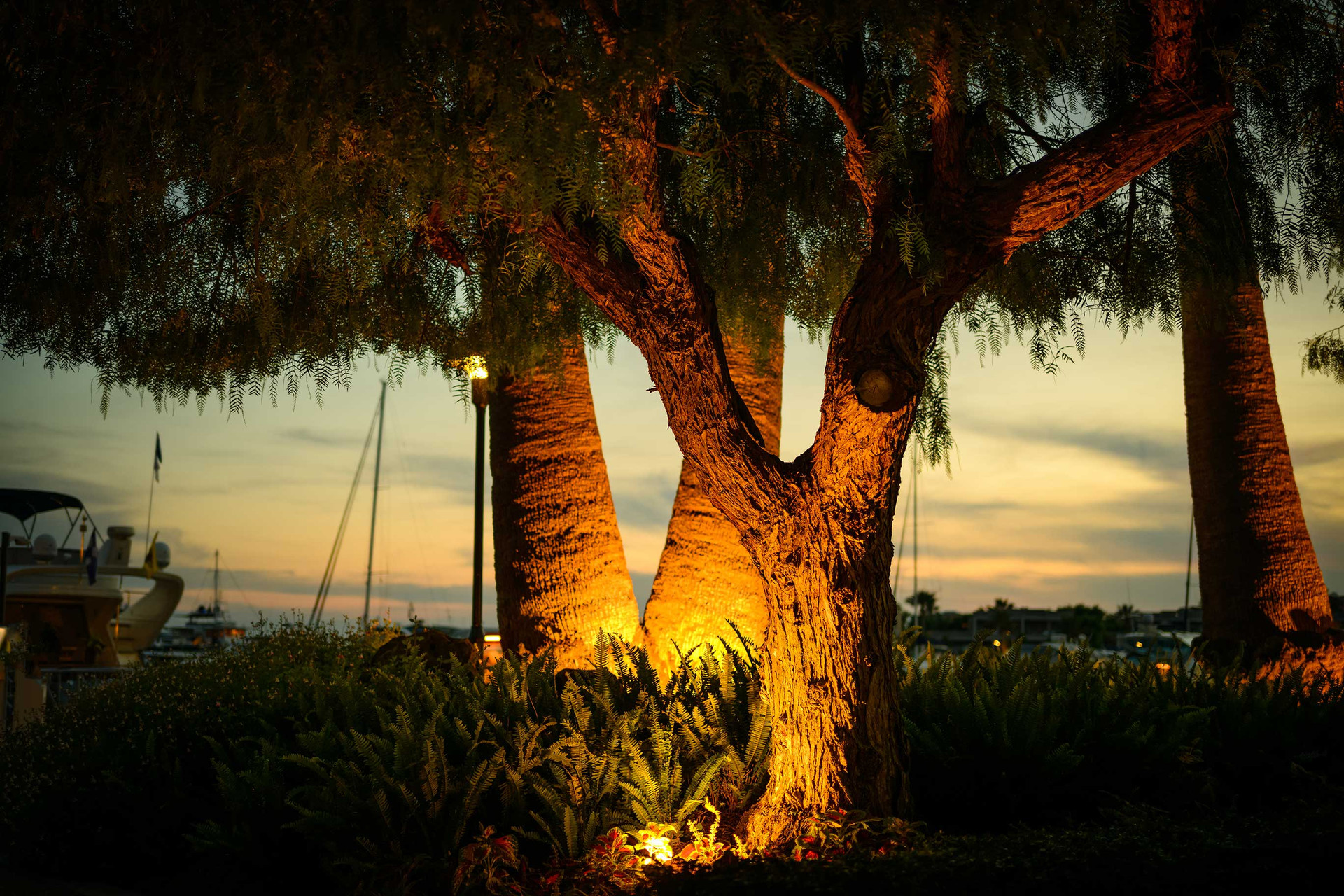
This is probably the most common use for well lights and honestly, it looks amazing when it's done right. Stick one of these a few feet from the base of a nice tree and the light goes straight up through the branches. You see all the texture of the bark, the way the branches twist, everything. And since you can't see the fixture, it genuinely looks like the tree is lit from within.
If you've got a tree with really thick leaves, they make well lights with a little grid over the top. Louver cover, they call it. It just narrows the beam so the light actually goes up into the canopy instead of spraying all over your lawn. Super useful for trees in the middle of a big open yard.
But here's the thing. Well lights have limits. If you've got a massive hundred-foot oak with branches way up in the sky, a well light isn't gonna do much. The light just doesn't reach that high. That's when you need a spotlight.
So Which One Do You Actually Need?
There's no single right answer. Most good lighting designs use both. Here's how I think about it.
Grab a well light if it's going somewhere people walk or drive. Lawns, walkways, driveways. Anywhere you need a flat, safe surface. They're also perfect for shorter trees and columns where the light source is close to what you're lighting.
Pick a spotlight if you're lighting something tall. Big shade trees, two-story houses, anything that needs a long reach. Anytime you need precision and adjustability, spotlight's the move.
And please, spend the extra money on brass. I know it costs more. I know it's tempting to save a few bucks. But plastic and aluminum fall apart. Brass lasts forever. You'll buy it once and never think about it again.
Which One Looks More Dramatic?
If you want that wow factor, spotlights usually take the win. You can do all kinds of cool stuff with them. Graze light across stone walls. Create dramatic silhouettes. Wash a whole facade with light. Well lights are more subtle. More mysterious. The light just seems to come out of nowhere. For an elegant, classy look, that hidden effect is hard to beat.
But honestly? The best yards use both. A little hidden glow from well lights, mixed with some dramatic spotlight action on the main features. That layering is what makes a yard look professional instead of just okay.
What About Maintenance?
Well lights are generally pretty low maintenance once they're in the ground. They're protected from all the dumb stuff that happens above ground. Lawnmowers can't hit them. Kids can't kick them. The downside is they're a pain to work on if something goes wrong. Need to change a bulb? Hope you like digging.
Spotlights are easy to access and adjust. But because they're out in the open, they get knocked around all the time. You'll be re-aiming them constantly. The material matters a ton here too. Brass holds up. Cheap stuff doesn't.
Are Well Lights Safer?
Yes. And this is a big deal for driveways and walkways. Since they sit flush with the ground, there's nothing to trip over. No stake sticking up. No housing to hit with your car. If you're lighting any kind of path or driveway, a well-rated well light is just the smarter, safer choice. It's not even a debate.
FAQs
Are well lights or spotlights better?
Depends what you're lighting. Well lights for walkways and shorter stuff. Spotlights for tall stuff and when you need adjustability.
What's the real difference?
Well lights go in the ground. Spotlights sit on top.
Can I use a well light on a tree?
Yeah, it's actually one of the best uses for them. Just put it near the base.
Are spotlights brighter?
Not necessarily. Brightness depends on the bulb, not the fixture type. Spotlights just give you more control.
When should I pick a well light over a spotlight?
When it's in a walkable area or you want the fixture hidden.
What's the best tree light?
Shorter to medium tree? Brass well light with a louver cover. Tall tree? Spotlight.
Do well lights need less maintenance?
Generally yes, until they do need something. Then they're a pain.
Are well lights safer for driveways?
Absolutely. No tripping hazard.
Which one looks more dramatic?
Spotlights for big drama. Well lights for subtle elegance.
What's best for a home?
Use both. Well lights for the lawn and walkways. Spotlights for the house and big trees.
Wrapping This Up
Look, nobody's gonna tell you one is always better than the other. That's not how this works. Well lights disappear and keep walkways safe. Spotlights give you flexibility and reach for the big stuff. The best properties use both, and they use them where they make sense. Spend the money on brass. Do it once. Don't think about it again. Your yard will look incredible and you won't have to replace everything in three years when the cheap stuff falls apart.


