
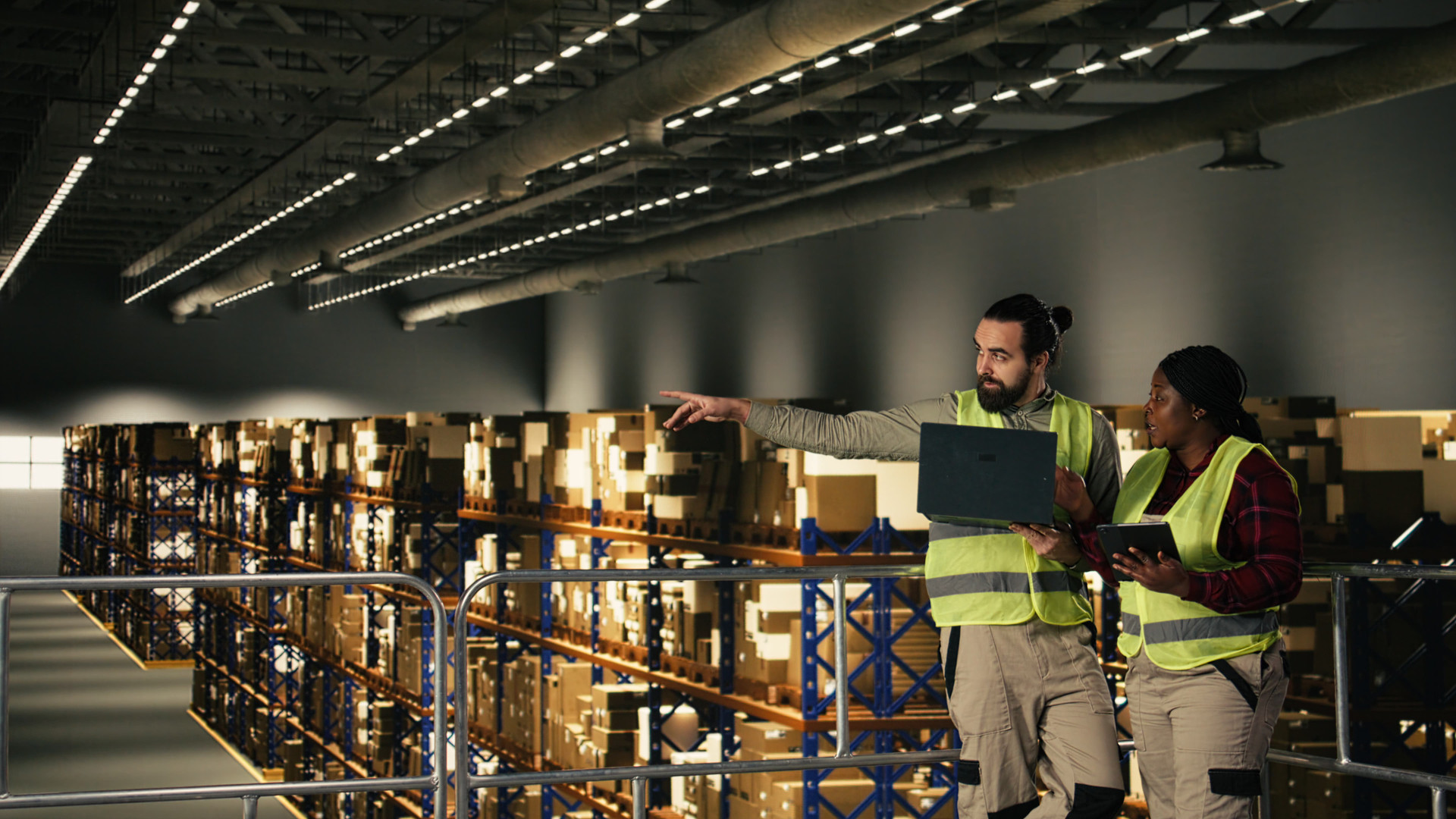
Warehouse LED Lighting: High Bays & Wall Packs Guide
Warehouse LED Lighting Guide: High Bay Fixtures and Exterior Wall Packs
Let’s cut the corporate fluff. You don't buy warehouse lights just to look at them. You buy them so Dave on the forklift doesn't run over a pallet because he couldn't read the barcode on the third rack. Most lighting guides act like this is a simple math equation. It’s not. You’re fighting racking, aisle widths, dust, night shifts, and a power bill that never stops climbing. Figure out what each zone actually needs before you let a catalog talk you into forty high bays.
The Wattage Trap
Those old metal halides eating your budget alive? Swapping to LEDs will absolutely cut your power usage. But stop staring at the wattage sticker on the box. It’s a rookie move. I’ve seen a 150W LED with garbage optics get completely outshone by a properly engineered 200W unit. You need to look at delivered lumens and beam patterns.
Also, think about the labor. Changing a fixture 30 feet in the air above active racks is a massive headache. You need a scissor lift, an electrician, and you have to halt operations. So yeah, long lifespan is great. But don't buy into the "100,000 hours" marketing blindly. That's a lab number. Over a dusty loading dock, it might die way sooner.
How Bright Does it Actually Need to Be?
Skip the textbook definitions. You measure light in foot-candles (FC). An aisle that nobody goes down? 5 to 10 FC is fine. Active forklift lanes? Bump it to 20 or 30. If someone is squinting at tiny labels at a packing station, you need 30 to 50 FC. Detailed inspection? 50 to 100.
And ignore the guy who tells you OSHA requires exactly five foot-candles everywhere. That specific rule comes from the HAZWOPER standard (hazardous waste). It does not automatically apply to a standard warehouse. Check local codes, but don't let a consultant scare you into overlighting the place. Also, make sure you light the rack faces, not just the floor. Bright floors and dark shelves don't help anyone.
UFOs vs. Linear
Round UFO fixtures are great for open floor plans with high ceilings. Linear high bays are long and rectangular, making them a natural fit for aisles and rack rows.
Neither one is magically better. It’s about matching the beam to the space. If you stick a tight-beam UFO over a wide aisle, you get blinding pools of light and dark spots in between. You have to look at the photometric data.
Back-of-the-Napkin Math
Let’s say you have 8,000 square feet. You want a decent 30 FC across the floor. That’s 240,000 lumens needed at the work plane (8,000 x 30).
But light gets lost. Dust, shelving, ceiling height it all eats the light. So you divide by a utilization factor (let's say 0.60) and a light loss factor (say 0.80). Now you actually need about 500,000 fixture lumens. If your high bay spits out 25,000 lumens, you're looking at roughly 20 fixtures.
Is this exact? No. It's a starting point. Get a real photometric layout done before you drill holes in the ceiling. And for the love of everything, don't just guess the spacing. "10 to 20 feet apart" is a guideline, not a law.
Exterior and Controls
Outside, you need wall packs for the doors, docks, and walkways. Keep the light down on the ground where people are walking. If you buy wall packs that are too bright, you just create glare and annoy the neighbors. Look for wet-location ratings, adjustable cutoff, and photocells.
Inside, controls matter. Motion sensors are great for that random aisle nobody visits. They are terrible for a busy forklift lane unless you want someone suddenly driving in the dark. Daylight harvesting is solid if you have skylights. If you're using 0-10V dimming, verify your drivers and controllers actually talk to each other.
Real Product Examples
If you're looking at the RAB H17, it's a solid high bay. Field-adjustable wattage and color temp (60W to 500W). But don't just crank them all to max. Run the calculation.
For the doors, the RAB SLIM17 wall pack is decent. 15W and 30W models with seven cutoff positions so you can aim the light down.
If you see the Diode LED SWITCHEX+ R1 driver, don't buy it for your warehouse high bays. That thing is for low-voltage 12V/24V LED strips (like under cabinets or in offices). It is not a 0-10V dimmer for a high bay or a wall pack. Check your voltage and control compatibility before you burn money.
Where the Savings Come From
Run the math on a real upgrade. Say you have thirty 400W fixtures running 12 hours a day, 300 days a year. That's 43,200 kWh. Swap those for 150W LEDs, and you drop to 16,200 kWh. You just saved 27,000 kWh. At 15 cents a kWh, that's over $4,000 a year. That's real money. (Just remember old fixtures with ballasts might actually pull more than their label says).
Don't Make These Mistakes
Buying by wattage. Ignoring the rack faces. Putting fixtures too far apart. Overpowering the exterior wall packs. Treating dimmers and sensors like they are universal plug-and-play.
Do the layout, check the optics, verify the controls. Don't buy lighting like you're shopping for lightbulbs at the grocery store.
If you need to source the RAB H17 high bays or the SLIM17 wall packs, places like Cans & Fans carry them. But let a pro check the photometrics before you hit checkout.


