
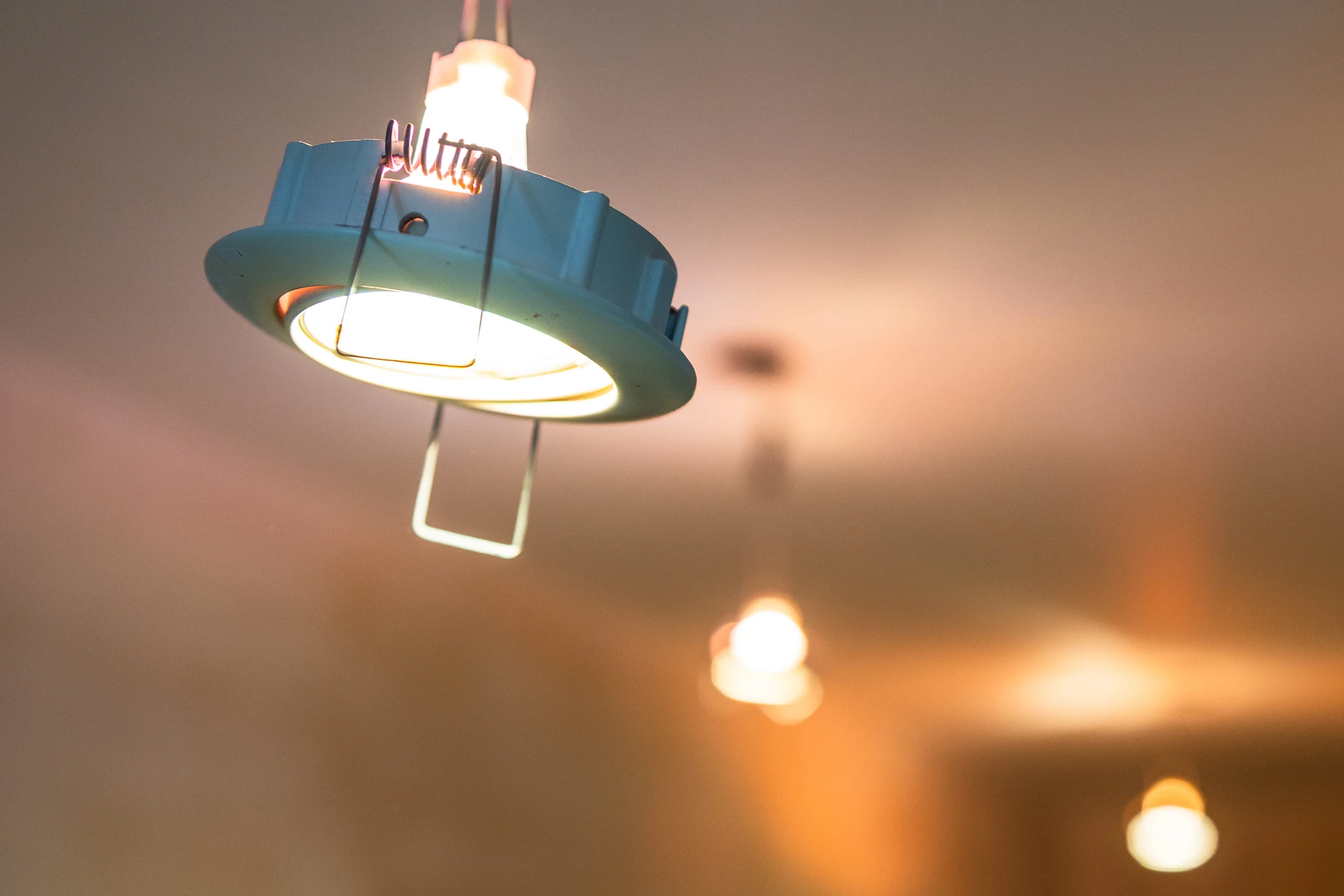
Recessed Lighting Parts: Housings, Inserts & Trims
Recessed Lighting Parts Explained: Housings, LED Inserts, and Mud Plates
If you want a ceiling that looks clean and doesn't have bulky fixtures dangling everywhere, recessed lighting is usually the way to go. You see them in kitchens, living rooms, offices, and pretty much any commercial space where people want good light without visual clutter.
But picking out the actual parts? That can be a total headache.
When you're staring at a product catalog, things like housings, LED inserts, trims, and mud plates all start to blur together. They look similar, they sit next to each other on the page, but they do completely different things.
Basically, the housing is the metal box hiding in your ceiling. The LED insert makes the light. The trim is the visible ring you see on the ceiling. And if you want that high-end, seamless architectural look, you use a trimless mud plate to blend the fixture right into the drywall.
Knowing this stuff matters a lot when you're replacing old lights, messing with adjustable downlights, or planning a trimless ceiling. Here is how the components work, what you actually need, and what to check before you buy.
The 5 Main Parts of a Recessed System
Every traditional setup is a little different, but most housing-based systems have these core pieces:
- The Housing
This is the metal "can" installed above the ceiling. It supports the whole lighting assembly and holds the wiring. Some have built-in junction boxes, clips, or brackets. - The LED Insert (or Light Engine)
This is the actual light. Depending on the model, it might have a heat sink, a lens, or an adjustable mechanism. The cool thing about modern LED inserts is that many are removable. You can upgrade them without ripping out the whole housing—just make sure the replacement is approved for your setup. - The Trim
This is the part you actually see. It surrounds the ceiling hole and affects glare, beam direction, and how the light looks. You'll see baffle, reflector, gimbal, and wall-wash trims. - The Mud Plate (Trimless Adapter)
If you hate the look of trim flanges, this is the accessory you need. It lets you mud the light right into the ceiling so it looks like a seamless hole. - Electrical & Mounting Bits
Depending on the fixture, you might also need LED drivers, hanger bars, gaskets, or wiring connectors.
Not every light needs every part. A lot of modern fixtures combine a few of these into one piece.
Let’s Talk Housings (New Build vs. Remodel)
The housing is the foundation. It dictates what components fit, how it mounts, and whether you can bury it in insulation.
New Construction Housings: These go up before the drywall. They use hanger bars that nail right to the ceiling joists. Since the framing is exposed, your electrician can position them perfectly. Great for new homes and big renovations.
Remodel Housings: These are a lifesaver if your ceiling is already painted. You don't need access to the joists. They use retaining clips to grab onto the existing drywall. Perfect for adding a light to your living room without cutting a massive hole in the ceiling.
IC-Rated vs. Non-IC: This is a safety thing. "IC-rated" means the housing can safely touch insulation. Non-IC housings need clearance. If your ceiling is packed with insulation and you cover a non-IC can, you're asking for trouble. Always check this rating.
A Quick Product Mention: ELCO 3-Inch Dedicated LED IC Airtight Remodel Housing (EL390RICA)
If you're upgrading an existing ceiling, this one is a solid choice. It's a 3-inch can, IC-rated (safe for insulation), and airtight to stop drafts. It uses four clips to hold onto the drywall and features a quick-connect for compatible inserts. It runs on 120V and maxes out at 14W. Just a heads up: the housing doesn't make light. You have to buy the LED insert and trim separately.
What About LED Inserts?
These are the light engines. Instead of an old-school bulb, most modern setups use dedicated LED modules.
Fixed Inserts: These shoot light straight down. They are cheap, simple, and perfect for general lighting in hallways or kitchens.
Gimbal/Adjustable Inserts: These tilt and rotate. If you have a piece of art on the wall or want to highlight a bookshelf, you want an adjustable gimbal.
What to check before buying an insert:
- Lumens: How bright is it?
- Color Temp: Warm (2700K) for cozy rooms. Cool (4000K-5000K) for workspaces.
- CRI: Look for 90+. It means colors look natural.
- Dimming: Make sure it works with your dimmer switch.
A Quick Product Mention: ELCO 3-Inch Round LED Adjustable Gimbal Insert (EL313CT5W)
This little guy is a 9W insert pushing out about 700 lumens. It has an awesome 93+ CRI and you can switch the color temperature from 2700K to 5000K right on the unit. It tilts 25 degrees and rotates a full 358 degrees. TRIAC/ELV dimmable, damp-rated, and very compact. Great for highlighting specific areas.
Trimless Mud Plates (For the Minimalists)
If you want the ceiling to look like it has zero visible lighting hardware, you need a trimless system.
A mud plate is just a flat plate that goes around the light opening. You screw it to the drywall, skim it with joint compound, sand it, and paint. Suddenly, the light is just a clean hole in the ceiling.
Just remember: the mud plate is not the housing and it's not the light. It's just a drywall accessory.
A Quick Product Mention: Nora Apollo 3-Inch Round Trimless Mud Plate (NAP-TLMR-3R)
This plate is made specifically for Nora's Apollo trimless system. It gives you that flawless, flangeless look.
Huge warning: Do not mix and match brands here. Just because this Nora plate is 3 inches and an ELCO housing is 3 inches doesn't mean they fit together. Trimless systems are proprietary. The mud plate, housing, and trim need to be an officially approved combo.
Can You Mix and Match Parts?
Recessed lighting is not universal. Just because two things say "4-inch" on the box doesn't mean they work together.
Before you buy replacement parts, check these five things:
- Dimensions: A 3-inch aperture isn't a standard. Check the exact cutout size.
- Electrical: Do the connectors match? Is the voltage right? What's the max wattage?
- Mounting: Does the insert use springs, clips, or a twist-lock?
- Safety Ratings: If the housing is IC-rated, the insert might not be. Check the whole assembly.
- Docs: Look at the manufacturer's compatibility chart. If it's not listed, don't risk it.
The Quick Breakdown:
- Housing: Holds the stuff. (Check: IC rating, new build vs remodel)
- LED Insert: Makes light. (Check: Lumens, CCT, wattage)
- Trim: Finishes the edge. (Check: Style, how it mounts)
- Mud Plate: Blends into drywall. (Check: Brand compatibility)
- Driver: Powers the light. (Check: Voltage)
How to Plan Your Project
If you're building a house, pick your housing before the drywall goes up. It makes wiring way easier.
If you're fixing up an existing room, stick to remodel cans.
If you just want to change the vibe of a room and you already have compatible housings, you can sometimes just swap the LED insert (e.g., changing a fixed light to a gimbal).
And if you want a trimless ceiling? Plan it out early. You have to coordinate the mud plate, housing, and trim before the drywall finishers show up.
Also, check your ceiling depth and local electrical codes. Unless you know what you're doing, hire an electrician for the actual wiring.
FAQs
What are the main parts of a recessed light?
The housing, the LED insert (or bulb), the trim, and the wiring components. Some setups also need a driver or a mud plate.
What is a housing?
It's the metal enclosure in the ceiling that holds everything together.
What's the difference between a housing and an insert?
The housing stays in the ceiling forever. The insert is the light engine, and it can usually be swapped out.
What is a mud plate?
It's a piece of metal or plastic you use to blend a light into the drywall so there's no visible trim flange.
Are all recessed light parts universal?
Absolutely not. Sizes are nominal, mounting clips differ, and brands love proprietary designs. Always check the manual.
Can I mix brands?
Sometimes, but only if the manufacturer says it's okay. Don't guess.
What is an airtight housing?
It's a can designed to stop air from leaking between your living room and the attic. Good for energy efficiency. (Note: Airtight and IC-rated are two different things).
How do I know what insert fits my old housing?
Find the model number on the old housing. Look up its spec sheet and see what inserts are approved for it.
Do I need a housing for every light?
Nope. "Canless" downlights are super popular now. They are self-contained units that just clip right into the drywall and have a separate junction box.
Final Takeaway
Don't just buy parts because they look the same size. Housings are the foundation, inserts do the heavy lifting, and trims dictate the style. If you want a seamless look, mud plates are your best friend—but only if you use the right system.
Do your homework on compatibility before you buy. It'll save you a lot of returns, headaches, and drywall repairs later.
If you're looking for a good place to start, check out the recessed lighting section at Cans & Fans for compatible inserts, housings, and accessories.


