
In-Ground Lighting Ideas for Trees, Walls, and Driveways
Here's how I think about it. Landscape lighting falls into two groups. Stuff you see. And stuff you don't.
Path lights, lanterns, post lights those are the visible ones. They're part of the scene. But in-ground fixtures? Their whole job is to hide. A well light sits right there at ground level, flush with the dirt or pavement. The lamp itself is tucked down below and aimed up through a grate or lens.
That design is what makes well lights the go-to for uplighting. You want the focus on the landscape, not on the gadget doing the lighting. And because they're down there below grade, they can handle foot traffic. They don't get wrecked by lawnmowers. And they don't tip over after a rough winter the way those cheap stake lights always seem to.
Tree Uplighting Ideas Using Well Lights
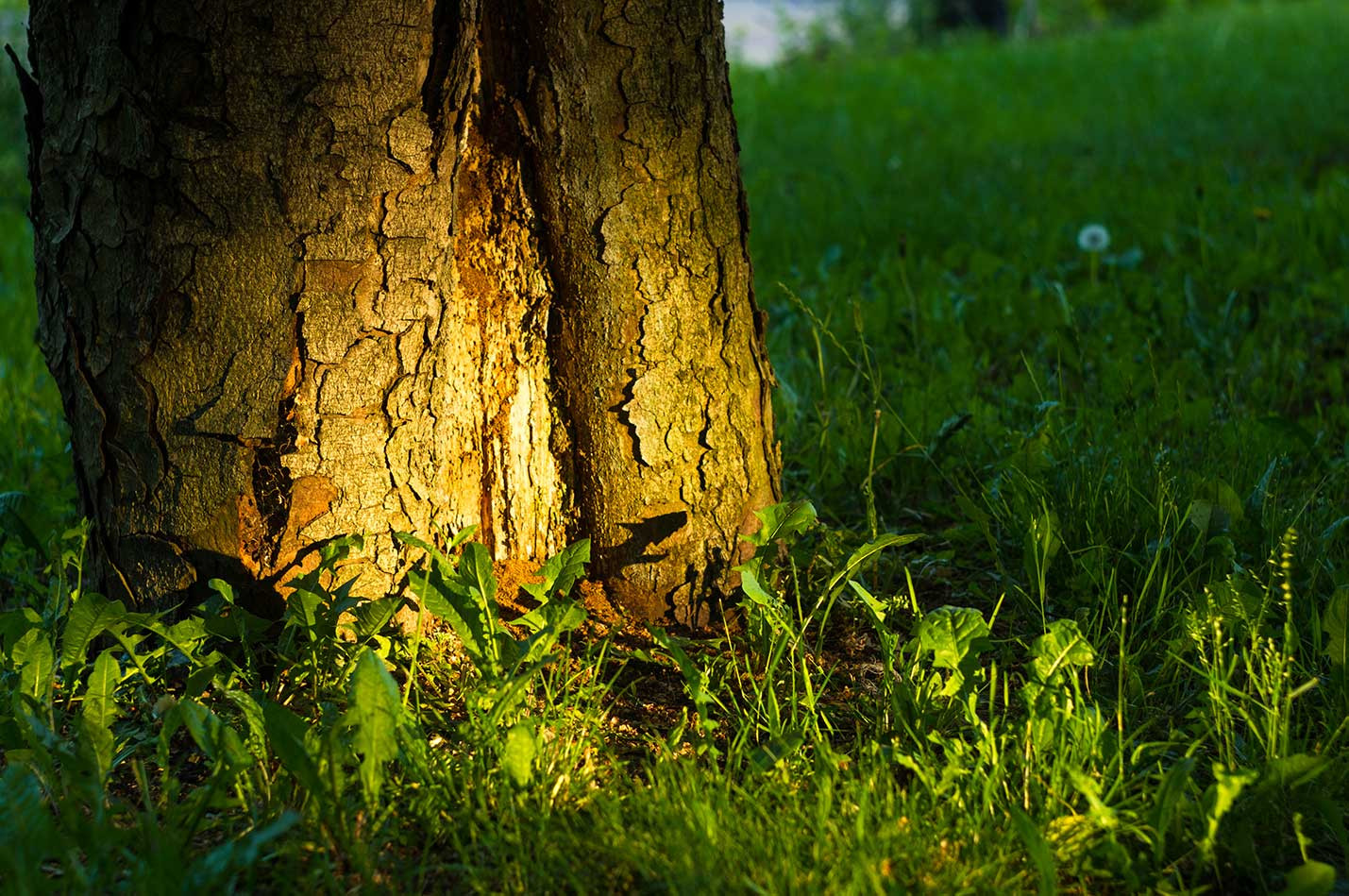
If you want drama in a yard, tree uplighting is where it's at. And well lights are built for exactly this job. The basic idea is simple enough stick a fixture near the base, point it up, let the light travel through the branches.
Placement Distance and Angle
Most pros will tell you to keep it about 1 to 3 feet from the trunk. Tilt it up at roughly 45 to 60 degrees. Get too close and the bark looks flat and weird, and you won't reach the canopy. Get too far and the beam gets all spread out and weak before it does anything useful.
Wattage by Tree Size
Match the fixture to the tree. Nothing fancy here.
- Small ornamental trees, under 15 feet look for 5–8 watt LED fixtures, roughly 300 lumens
- Medium trees, 15 to 30 feet, go 10–15 watts, maybe 500 lumens
- Big canopy trees, mature oaks, pines, spreading maples, those want 15–20 watts, often 1,000+ lumens, and sometimes more than one fixture per tree
Cross-Lighting for Wider Canopies
A cast-brass well light is worth the investment. It'll sit in the ground for years without falling apart, unlike composite or aluminum stuff. The Liberty LBE-201-AB 12V Cast Brass Well Light works well for small to mid-size ornamental trees where you want something compact and low-profile.
Outdoor Uplighting Ideas for Walls and Architectural Features
Trees aren't the only thing that benefits from light coming from below. Retaining walls, stone facades, columns, textured exterior walls they all gain something when light grazes upward instead of falling flat from above.
Best Way to Light a Retaining Wall
There's a technique called grazing. Put the fixture close to the base say 6 to 12 inches away and angle it steeply upward so the beam runs right up the face of the wall. That tight angle catches all the texture in stone or brick and throws shadows that give the wall depth. Under flat daylight? You don't see that kind of detail at all.
For wall grazing where you might want a little adjustability, the Liberty LBE-202-AB 12V Cast Brass Well Light holds up well along hardscape edges and planting beds.
Driveway Landscape Lighting: Lighting the Approach
Driveways are a different animal. You're not going for drama here. You need it clear, safe, evenly lit, and it should still look like someone thought about it instead of just throwing lights at it.
How to Light a Driveway with Landscape Lighting
Most driveway lighting plans use a border of low fixtures along one or both edges. Spaced to create a steady rhythm, not just random pools of light. In-ground well lights work great here because they sit flush. No post sticking up for a car, a mower, or a snowplow to hit.
A lot of designers will pair driveway well lights with uplighting on nearby trees or entry columns. That way the whole approach reads as one continuous design, not a bunch of disconnected dots.
If glare is a concern along the driveway, the Liberty LBE-203-AB Brass Well Light with Louver Cover directs the light downward and outward while keeping the lamp hidden from eye level.
Color Temperature, Spacing, and Other Planning Basics
Two things trip people up more than anything else. Color temperature and spacing. Mess these up and even your best fixture placement will look off.
Choosing a Color Temperature
For homes, warm white 2700K to 3000K is the go-to. It looks like traditional incandescent light and it's flattering to natural materials. Bark, stone, brick, greenery all look better under warm light than under that bluish cast from higher Kelvin fixtures. And here's the thing. Stay consistent. Mixing 2700K path lights with 4000K uplights on the same tree will look disjointed every time, no matter how nice the fixtures are.
Spacing Fixtures Correctly
Spacing depends on output and application. Wall-grazing and driveway-border fixtures usually fall in the 4 to 8 foot range. Lower wattage means closer spacing. Higher wattage means you can spread them out a bit. Tree uplighting isn't really about spacing at all it's about placement. One fixture for a small tree. Two for larger canopies. Position them for shadow and depth, not for a grid.
Final Thoughts
Here's what I've seen over the years. The best in-ground landscape lighting plans have one thing in common. Restraint. Fixtures stay hidden. Color temperature stays consistent. Every beam of light has a purpose revealing a canopy, grazing a wall, guiding a driveway. Start with one or two focal points. Get the wattage and angle right. Expand from there. Most people think they need more fixtures than they actually do. They just need the right ones, put in the right spots.
Frequently Asked Questions
What are the best in-ground lights for landscaping?
Cast brass or cast bronze well lights are generally your best bet for the long haul. They resist corrosion, handle foot traffic and lawn equipment, and don't break down the way composite or stamped aluminum housings can after repeated moisture and freeze-thaw cycles.
Can well lights be used for driveways?
Yeah, they work great. The flush, in-ground housing makes them practical for driveway edges since there's no raised post for vehicles, plows, or mowers to catch. A louvered cover is often added along driveways to cut down on glare for drivers and pedestrians.
How many well lights do I need for a tree?
One fixture is usually enough for a small or medium ornamental tree. Larger canopy trees, or trees with an uneven branch spread, typically need two fixtures placed on opposite sides of the trunk to fill in shadows and properly light the full canopy.
Where should landscape uplights be placed?
Uplights go at the base of whatever you're highlighting a tree trunk, a wall, or a column. Position them close enough that the beam angle hits the target without spilling onto unrelated areas. For walls, that typically means 6 to 12 inches from the base. For trees, 1 to 3 feet from the trunk.
Are well lights waterproof?
Quality well lights are built and rated for direct burial and standing water exposure, with sealed lenses and gasketed housings. That said, waterproof ratings vary by manufacturer, so it's worth checking the IP rating before installing any fixture in a low spot or area prone to pooling water.
What is the best way to light a retaining wall?
Grazing is the standard technique. Place the fixture close to the wall's base and angle it steeply upward so the beam travels across the surface texture. This close, steep angle creates shadow lines that bring out stone or brick texture far more effectively than a fixture placed farther back.


