
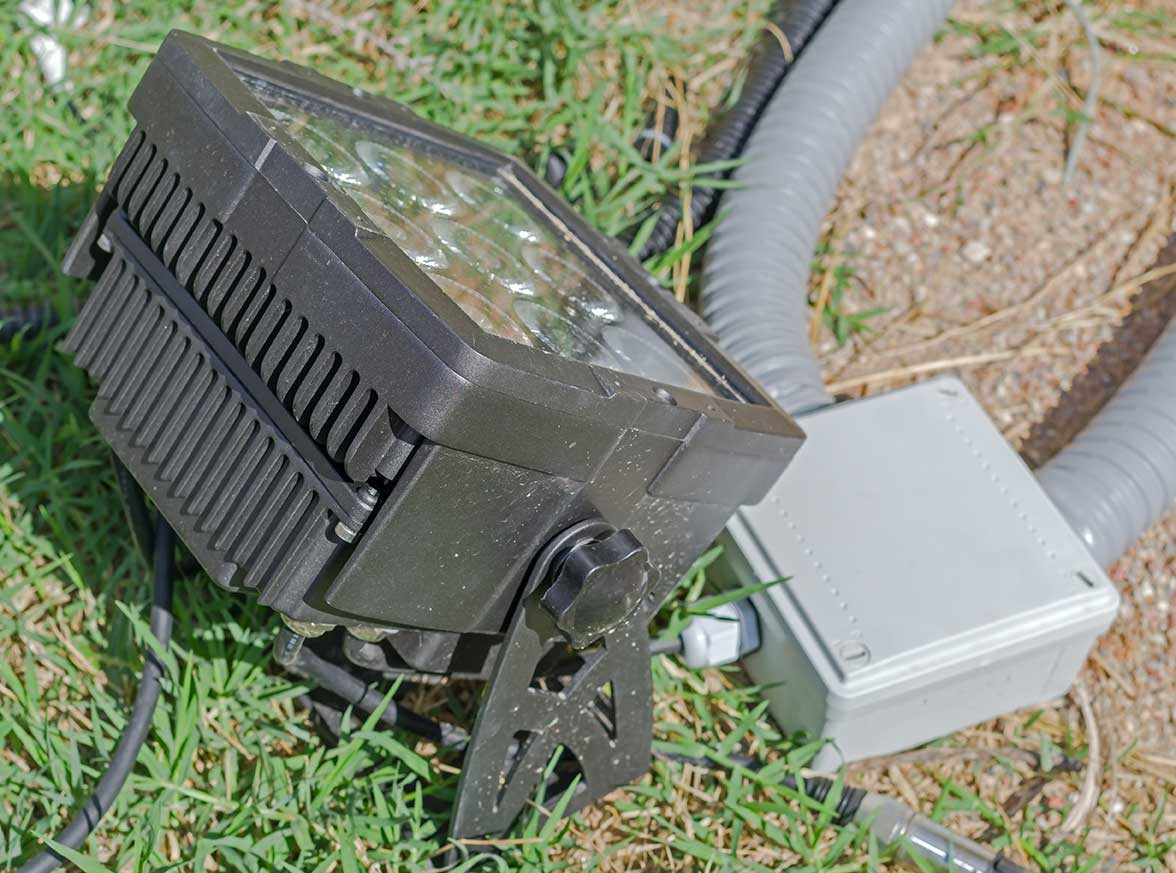
Do You Really Need a Transformer for Landscape Lighting?
Alright, let me save you some trouble right now. If you’re putting lights outside around your yard like path lights, spotlights, those little well lights yeah, you need a transformer. It’s not optional. I don’t care what some guy on YouTube said. You skip it, and your lights are either dead on arrival or will die within a week.
What even is this thing? Picture a little box – sometimes plastic, sometimes metal – that you plug into an outdoor outlet. Your house gives it 120 volts. That’s way too much for those dinky garden fixtures. So the transformer drops it down to 12 volts or maybe 15. That’s the sweet spot. Safe enough to touch when it’s raining, strong enough to actually light up your walkway.
I’ve seen people try to wire 12V lights straight to a house outlet. Doesn’t work. Pop. Fizzle. Smoke. Then they call me asking for a refund on the lights. Nope, you needed a transformer from the start.
Anyway, this whole thing walks you through why you need it, how to pick the right one, where to stick it, and how not to mess up the math. Read it or don’t, but don’t say nobody warned you.
Why Low Voltage Systems Absolutely Need That Little Box
People go with low voltage for three reasons. Safety because 12V won’t kill you. Efficiency – LEDs sip power like a tea drinker. Flexibility: you can move lights around without hiring an electrician.
Your house current is like a fire hose. Your landscape lights are like a garden sprinkler. You need something to turn down the pressure. That’s the transformer.
Think of it as a translator. House speaks 120V. Lights speak 12V. A transformer just converts the language. Nothing magic.
What a Landscape Lighting Transformer Actually Does
I mean, yeah, it drops voltage. But a decent one does more. Here’s the real list:
- Takes 120V from your wall and gives you 12V (or 15V if you fiddle with the taps)
- Splits that power evenly so your first light isn’t blinding and your last light isn’t dim
- Protects against little surges – like when the fridge kicks on, or a storm rolls through
- Let's you plug in a timer or a photocell so lights turn on at dusk without you thinking about it
- Keeps everything running cool and efficient
No transformer? Your lights might turn on for half a second, then nothing. Or they’ll glow really bright and then die forever. Seen it a hundred times.
Do Landscape Lights Need a Transformer? Let’s Be Clear
Short version: yes, for most normal outdoor lights. The only times you don’t need one are:
- Solar lights. They have a tiny battery and a little solar panel. No transformer. But they’re also not very bright.
- Really high-end 120V fixtures. Those need an electrician and a permit. Not a transformer, but you can’t just plug them in either.
So for 99% of homeowners doing path lights, uplights on trees, or deck lighting yeah, you need a transformer. Don’t overcomplicate it.
Picking the Right Transformer Without Losing Your Mind
This is where people screw up. They buy a tiny transformer because it’s cheap. Then they add more lights later and wonder why everything’s dim. Or they buy a giant one and waste money.
Here’s what you do. Grab a pencil.
Step one – add up your lights.
Each light has a wattage. Usually 4W, 5W, sometimes 10W for bigger spotlights. Write them all down. Add them up.
Example: twelve little path lights at 4W each = 48 watts. Plus two spotlights at 10W each = 20 watts. Total = 68 watts.
Step two – add a buffer.
Multiply by 1.25. 68 × 1.25 = 85 watts. So you need a transformer rated for at least 85 watts.
Step three – round up to a real size.
You won’t find an 85W transformer. You’ll find 75W, 100W, 150W, 300W. So buy the 100W. That gives you a little room to add a couple more lights next summer.
Step four – leave extra for later.
Trust me, you’ll add more. I always do. So if you have 68 watts now, maybe buy a 150W transformer. Costs a few bucks more but saves you from buying another one later.
What to Look For
- Multi-tap. That means you can choose 12V, 13V, 14V, maybe 15V. Why? Because if your wire run is long – like over 100 feet – you lose voltage. Bumping it to 13V fixes that.
- A timer or a photocell. A photocell is that little eye that turns lights on at dusk. Timers are fine but you have to reset them when the seasons change. Photocells just work.
- Weatherproof box. It’s outside. It’s gonna get rained on. Make sure it says “outdoor” or “weather-resistant.”
- A breaker or fuse inside. If something shorts out, you want the transformer to shut off, not melt.
- Easy to mount. Some have screw holes on the back. Some have a little bracket. Just make sure you can get it on a wall or post without a fight.
I’ve used cheap ones and nice ones. The cheap ones die in two or three years. The nice ones last ten or fifteen. Your call.
Why 12V Is the Sweet Spot
Most houses use 12V. It’s safe, it’s common, and almost every LED light at Home Depot or Lowe’s runs on 12V.
But here’s the catch – voltage drop. That’s when your wire is too long and the lights at the end look like candles about to go out. You can fight it by using thicker wire (like 12-gauge or 10-gauge) or by using a transformer that lets you turn up the voltage a little.
Some pros use 15V for long runs. Works fine. Just don’t go over 15V or you’ll burn out your LEDs.
Where the Heck Do You Mount This Thing?
I can’t tell you how many times I’ve seen someone bury a transformer in a bush or hang it two inches off the ground where sprinklers hit it. Don’t be that person.
Do this:
- Plug it into a GFCI outlet. Those have the little buttons that say “test” and “reset.” Required by code for outdoors.
- Mount it at least a foot off the ground. Higher if you get snow.
- Put it somewhere easy to reach. You’ll need to reset the timer or check the fuse someday.
- Under an eave or overhang is great. Keeps rain off.
Don’t do this:
- Don’t bury it. It’s not a rock.
- Don’t put it inside a sealed plastic box. It needs airflow or it’ll overheat.
- Don’t put it 200 feet from your first light. That just makes voltage drop worse.
Near the outlet. Near your first light. Off the ground. Easy.
Safety Stuff
Here’s the thing. 12V is so low you can touch a bare wire and barely feel it. 120V can kill you. So using a transformer isn’t just about making lights work; it’s about not dying when you’re messing around in the garden after a rainstorm.
Kids, pets, wet grass, none of that matters with low voltage. That’s why pretty much every home landscape uses it. High voltage is for streetlights and parking lots. Not your backyard.
The Wattage Math
I’ve seen people pull out spreadsheets and voltage drop calculators and make this way harder than it needs to be.
Here’s the simple way:
Total watts of all lights × 1.25 = minimum transformer size.
That’s it.
Example:
You have 15 lights. Each is 4 watts.
15 × 4 = 60 watts.
60 × 1.25 = 75 watts.
So buy a 75W or 100W transformer.
Don’t overthink it. If you’re between sizes, go bigger.
Can One Transformer Run Everything?
Sure. One big transformer can run the front yard, the backyard, the side yard – everything – if it’s big enough. Just add up all the watts from every single light. Then add 25%. Then buy that size or the next size up.
But for really big yards? Sometimes two smaller transformers are better. Why? Because you can put one in the front and one in the back, and you don’t have to run a super long wire from the front all the way to the back. Less voltage drop, more control.
Some fancy transformers have two or three built-in “zones.” Those are nice but pricey.
How Far Can You Go?
The transformer doesn’t have a “max distance” sticker on it. It depends on your wire and how many lights.
Rough rule of thumb:
- With 12-gauge wire, you can go 100 to 150 feet before lights start looking dim.
- With 14-gauge wire, more like 75 to 100 feet.
- With 16-gauge (thin stuff), keep it under 50 feet.
If you need to go farther, use thicker wire (10-gauge) or bump the voltage up to 13V or 14V on the transformer taps.
Or break your system into two separate runs from the transformer – like one wire going left, one going right.
FAQs
Do low-voltage landscape lights need a transformer?
Yes. Unless they’re solar. Solar lights are their own little thing.
What does the transformer actually do?
Turns 120V into 12V. That’s the main job.
How do I pick one?
Add up watts. Multiply by 1.25. Buy that size.
What size for a small yard?
75W to 150W is plenty.
Medium yard?
150W to 300W.
Big property?
300W or more, or multiple transformers.
One transformer for everything?
Yes, if it’s big enough. No, if you have a huge yard.
How far can I run the wire?
Depends on wire thickness. 100–150 feet is safe with good wire.
Where do I put the transformer?
Near a GFCI outlet. Off the ground. Not buried.
Are LED landscape lights low voltage?
Most are 12V. Check the label – it’ll say.
Can a transformer be too big?
Not really. It won’t hurt anything. Just costs more upfront and uses a tiny bit more power when idle.
How long do they last?
A cheap one – 3 to 5 years. A good one – 10 to 15 years.
Final Thoughts
Look, a transformer isn’t sexy. Nobody’s gonna compliment you on it. But it’s the difference between a yard that looks great every night and a yard full of dead or flickering lights that makes you curse every time you walk outside.
Do the simple math. Leave a little room for future lights. Mount it somewhere smart. Spend a few extra bucks on a decent one with a photocell and multi-tap. Then forget about it for the next ten years.
Or skip all that and buy the cheapest thing on Amazon. Just don’t call me when your lights start acting up after six months. I told you so.


