
Bathroom Exhaust Fan With Heater: Remodel Guide
Bathroom Exhaust Fans With Heaters: Ventilation and Lighting for Remodels
Renovating a bathroom usually revolves around picking the right tile, finding a vanity that fits, and making the room look better. Ventilation and lighting tend to get pushed to the back burner. That’s a mistake. If you ignore the air quality, you end up with mirrors you can't see in, paint peeling off the ceiling, and mold growing in the corners.
Installing an exhaust fan that has a built-in heater solves a couple of headaches at once. It pulls the heavy damp air out of the room and actually keeps you warm when you step out of the shower. Do it right, and the space actually feels comfortable.
But planning this isn't just about buying something that looks nice. You have to figure out the square footage, match the airflow, consider the heating capacity, map out the ceiling, and make sure your electrical panel can handle it.
Why You Actually Need Ventilation
Showering pumps a massive amount of water vapor into the air. If the room is sealed up, that moisture doesn't go anywhere. It settles on the glass, the walls, and the wood. Left alone, it rots the framing and turns the caulk into a science project.
The Home Ventilating Institute says proper airflow is the only way to fix this. If you are already tearing the room apart for a remodel, upgrading the fan is the best time to do it. Fixing it later means ripping out drywall again.
How Combo Units Work
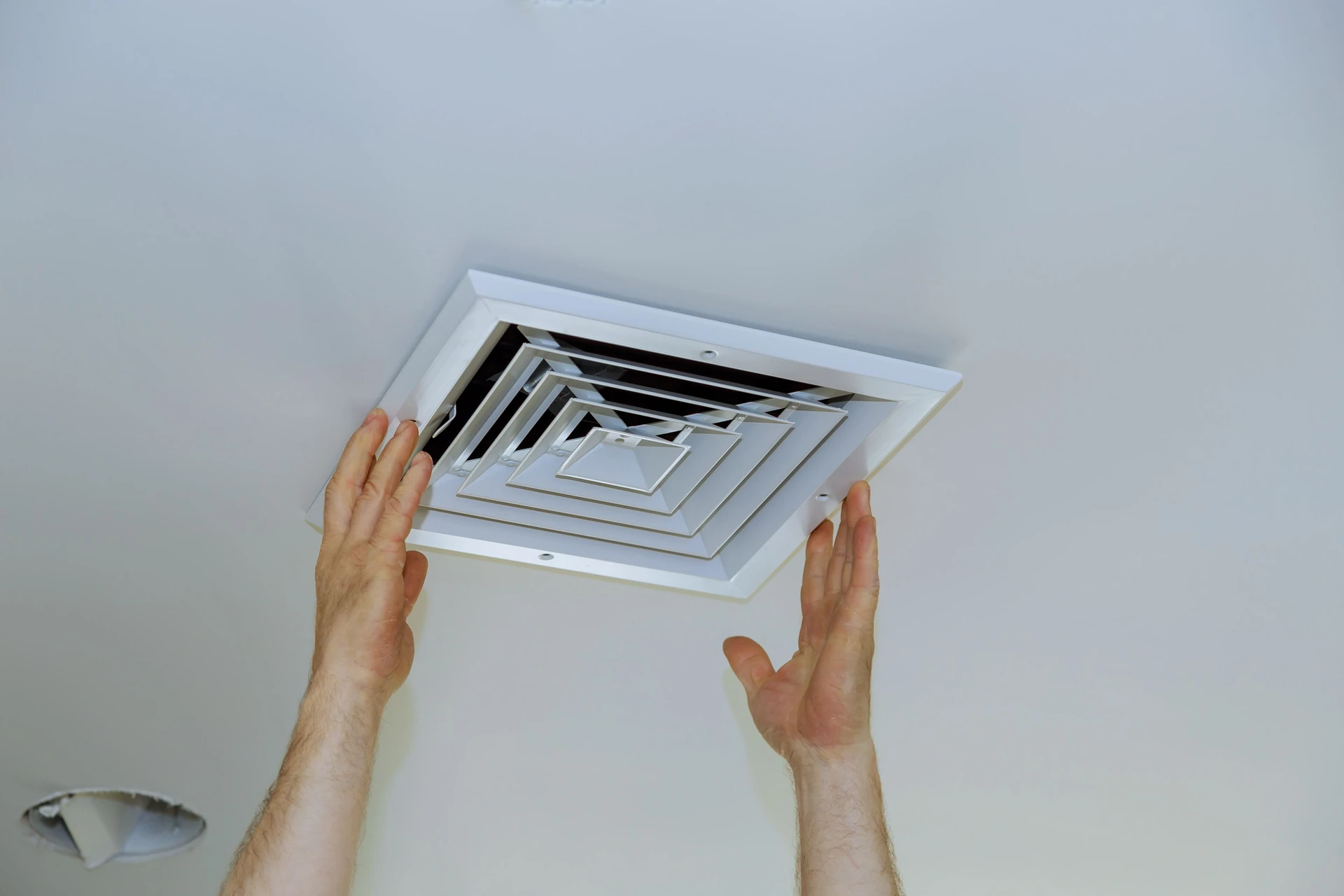
A fan-heater combo sits flush in the ceiling. One part acts like a normal exhaust fan, sucking air through a grille and pushing it outside via a duct. The other part contains a heating element usually ceramic PTC. It draws air in and blows warm air back down at you.
Depending on how your electrician wires the switches, you can run the heat before you get in the shower and leave the fan running for a half hour after you get out. Some models have built-in lights, but honestly, dedicated LED cans usually look a lot better in a remodeled space.
The CFM Math
You need to know the CFM (cubic feet per minute). This is the volume of air the fan moves. If you undersize it, the fan is basically useless.
A safe rule of thumb is 1 CFM for every square foot. So an 8x10 bathroom needs an 80 CFM fan. If the room is over 100 square feet, add 50 CFM for a shower and 100 CFM if you have a jetted tub.
Don't forget the ductwork. The fan is only half the battle. If the installer uses a squished flex pipe or adds too many elbows, the fan chokes. Keep the run to the outside as short and straight as possible.
A Few Product Examples
If you want flexibility, look at the Panasonic WhisperWarm DC. You can actually set it to 50, 80, or 110 CFM during installation. It has a 1,600W heater. Just know the base model doesn't have a light, and you can't put it directly over the shower.
For lights, the ELCO 4-Inch adjustable is great for aiming a beam at a specific wall or vanity area. It's damp-rated. If you need to flood the whole room with light, the Nora 8-Inch Canless puts out over 2,000 lumens. It's wet-rated, but you still have to follow code if it's near the tub.
Electrical Warnings
A 1,600W heater pulls about 13.3 amps. If you have a standard 15-amp circuit, that heater alone eats almost all of it. You cannot just swap your old fan for a heater combo using the same wiring. You’ll almost certainly need a dedicated circuit, and you definitely need a licensed electrician. Don't burn your house down to save a few bucks.
Placement and Lighting Layout
Put the exhaust fan near the shower or tub to catch the steam. But check the manufacturer instructions. Many heater units aren't allowed directly over the shower.
For lighting, don't rely on a single light. Use ambient light for general visibility, task lights near the mirror so you don't shave in the dark, and accent lights if you want to highlight a tile wall. Just make sure the lights you put near the water are wet-rated.
Keep all these fixtures spaced out. Recessed lights, exhaust fans, and joists all compete for the same space above the ceiling. Draw it out on paper before cutting holes.
Frequently Asked Questions
Are they worth the money?
Yes, if your bathroom is freezing in the winter. It combines two appliances into one and saves wall space.
Can they replace my main heater?
No. It's just for supplemental warmth. In a freezing climate, you'll still need your house furnace.
Can I run the fan and heater at the same time?
Usually, yes. But it's a bit counterproductive. You're paying to heat the room while the fan sucks the warm air outside.
How much does it cost to run?
A 1,600W heater running for 15 minutes uses about 0.4 kWh. At 20 cents a kWh, that's roughly 8 cents.
Do I need a special light bulb?
Use LED fixtures with a damp or wet rating. Standard bulbs will fail fast in a humid room.
Final Takeaway
A bathroom remodel is a chance to fix the underlying issues in the room, not just the cosmetics. A good vent/heater combo (like the Panasonic) and properly placed LED lights (like the ELCO or Nora) will make the room functional and comfortable. Address the ductwork and the wiring while the walls are open, and you won't have to worry about it again.


