
2700K vs 3000K vs 5000K Outdoor Lighting: Which Color Temperature Is Best?
You know that feeling when you step outside at night and something just feels... off? The patio looks cold. The brick wall looks flat. That beautiful oak tree you spent years nurturing looks like it belongs in a hospital parking lot instead of your backyard. You've got the right fixtures. You've got them placed perfectly. But the light itself is working against you.
Here's the thing about outdoor lighting that most people don't realize until they've already made the mistake: color temperature matters just as much as brightness. Maybe more.
So when you're standing in the lighting aisle or scrolling through options online, staring at those numbers 2700K, 3000K, 5000K what do they actually mean for your home? And more importantly, which one will make your outdoor space look the way you've always wanted it to look?
Let's cut through the confusion.
Quick Answer: What Works Best for Most Homes
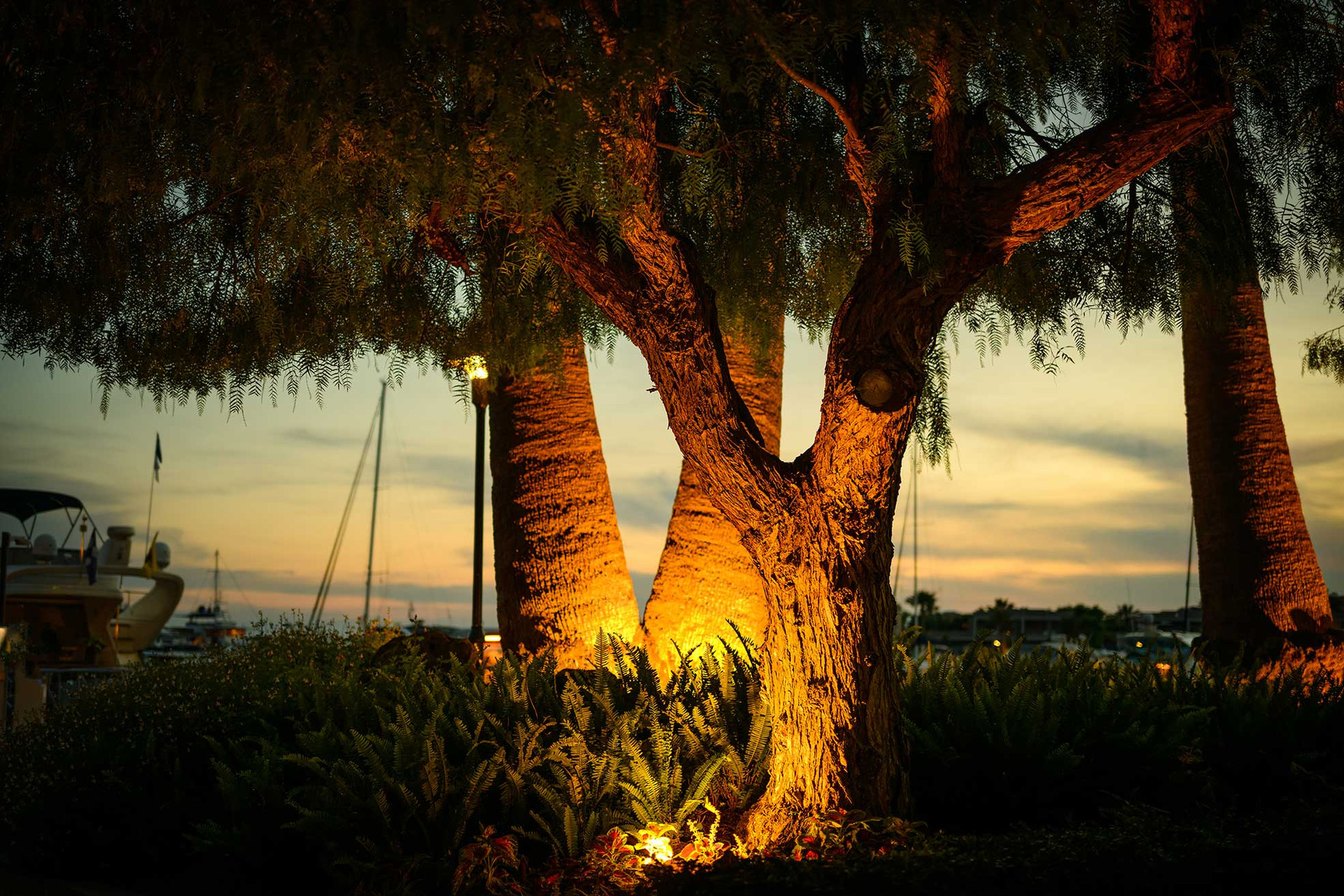
If you want your home to look warm and inviting at night, go with 2700K. Hands down. It's the color temperature that makes brick look rich and textured, makes wood look natural and warm, and makes your patio feel like somewhere you actually want to spend time.
3000K gives you something cleaner and slightly crisper. Think modern architecture, gray stone, or that outdoor kitchen area where you need to actually see what you're doing.
5000K? That's the really cool, blue-ish daylight look. And honestly? For most homes, it's going to make things look harsh and uninviting. Save it for commercial buildings or very specific security needs.
Here's a simple breakdown:
|
Color Temp |
What It Looks Like |
Where It Shines |
|
2700K |
Warm, golden, cozy |
Paths, patios, brick, wood, traditional homes |
|
3000K |
Clean white with a hint of warmth |
Modern homes, gray stone, driveways, task lighting |
|
5000K |
Blue-ish daylight |
Security, commercial spaces, very specific accents |
DarkSky actually recommends warmer residential lighting and generally limits approved outdoor fixtures to 3000K or lower. There's a reason for that cooler, blue-rich light is harder on the environment and harder on your eyes at night.
What's Color Temperature Anyway?
Here's what nobody tells you: color temperature doesn't measure brightness. That's lumens. Color temperature measured in Kelvin (K) tells you what the light looks like.
Think of it this way:
- 2700K: That soft, golden glow you remember from old incandescent bulbs
- 3000K: A cleaner white that's still warm but feels a bit more crisp
- 5000K: Like daylight on a cloudy afternoon cool, sharp, almost blue
A 2700K bulb and a 5000K bulb might put out exactly the same amount of light (lumens). But the 5000K will seem brighter and harsher because of how our eyes perceive color.
When you're designing your landscape lighting, you're really juggling four things:
- Color temperature – The mood
- Lumens – How much light
- Beam spread – How wide it goes
- The fixture – How it directs everything
And here's where it gets interesting: the bulb type matters just as much as the color temperature.
Why the Bulb Format Changes Everything
MR16, MR11, G4, wedge, bayonet these aren't just random letters and numbers. They're completely different types of bulbs designed for completely different purposes. You can't just pick a color temperature and grab whatever bulb looks about right.
MR16: Your Go-To for Directional Lighting
MR16 bulbs are the workhorses of landscape lighting. They've got that reflector design that pushes light forward, making them perfect for spotlights, uplights, floodlights, anything where you need to aim light at a specific target.
When to use 2700K MR16:
- That gorgeous red brick wall
- Warm stone or timber
- Oak trees with beautiful bark
- Traditional architectural details
- Garden sculptures
When to use 3000K MR16:
- Gray or charcoal stone
- Modern house exteriors
- Blue spruce or silver-leaf plants
- Contemporary sculptures
- Driveway features
One thing people often overlook with MR16 bulbs is beam angle. A narrow beam can highlight a single tree trunk or column. A wider beam washes a whole wall or spreads through a tree canopy. The color temperature sets the mood, but the beam angle determines what you actually see.
MR11: Small but Mighty Accents
MR11 bulbs are basically MR16's smaller sibling. Same reflector principle, just more compact. They're great when a full-size MR16 would stick out like a sore thumb.
Best uses for 2700K MR11:
- Small ornamental trees
- Garden accents and planters
- Low architectural details
- Intimate garden spaces
When to go 3000K with MR11:
- Modern garden accents
- Cool-colored stone or foliage
- Where you want cleaner definition
The smaller size means MR11 fixtures can hide more easily. You see the light, not the equipment. Just make sure you're actually getting an MR11; they're physically smaller and have different pins than MR16s. Don't assume they're interchangeable.
G4: Soft, Diffused Light for Paths and Decks
G4 bulbs are different. Instead of a focused beam, they generally spread light more broadly. The fixture itself whether it's a path light, deck light, or step light does the work of shaping that light.
Why 2700K G4 works so well:
- Pathway lights
- Deck and patio areas
- Step lights
- Garden beds
- Traditional fixtures
When 3000K G4 makes sense:
- Modern path fixtures
- Outdoor kitchens
- Contemporary deck lighting
- Gray retaining walls
Since G4 bulbs are often visible through a lens or under a fixture cap, glare is a real concern. Don't just grab the brightest one you can find, especially near seating areas or walkways. You want the light to be welcoming, not blinding.
Wedge Bulbs: Simple and Practical
Wedge bulbs use a push-in base no twisting, no pins. They've been around forever in path lights, step lights, and marker lights. LED versions are making them a practical replacement option again.
2700K wedge bulb applications:
- Path lights
- Deck fixtures
- Garden borders
When to consider 3000K wedge:
- More functional areas like driveway edges
- Modern steps
Wedge bulbs are usually in fixtures that diffuse or redirect light. So the fixture matters a lot more than with an MR16 spotlight. The bulb provides the color and light; the fixture shapes it.
Bayonet Bulbs: Secure and Traditional
Bayonet bulbs twist and lock into place. They're still available for older landscape lighting systems and have some advantages they stay put even in vibration-prone areas.
What bayonet bulbs are good for:
- Traditional path lights
- Area lights
- Deck fixtures
- Older low-voltage systems
2700K is almost always the right choice for bayonet replacements unless you're specifically matching a 3000K setup.
And here's the really important part: bayonet, wedge, G4, and MR bulbs are not interchangeable. Even if they have the same color temperature and voltage, the socket determines what fits. Always check what you're actually replacing.
Why 2700K Works So Well for Most Homes
Here's why 2700K is the safe bet: it just looks... right. It's warm without being yellow. It's inviting without being dim. It complements natural materials rather than fighting them.
Where 2700K really shines:
- Red brick and brown brick
- Sandstone and warm limestone
- Cedar, oak, and most wood
- Traditional and transitional homes
- Patios and outdoor dining
- Pathways and garden beds
- Firepit areas
- Brass, bronze, and copper fixtures
When you use 2700K MR16 uplights on a warm stone wall, the texture comes alive. The shadows have depth. Everything looks natural.
Use 2700K G4 bulbs in path lights, and your walkway feels like an invitation, not a runway.
Use 2700K wedge bulbs in deck fixtures, and your outdoor living space feels like an extension of your home.
The key is consistency. When all your bulbs share the same 2700K color temperature, the whole landscape connects visually. Even though MR16s, G4s, and wedge bulbs do different things, the shared warmth makes everything feel deliberate and cohesive.
When 3000K Is the Better Choice
Sometimes 2700K is just a little too warm. When you've got modern architecture, cooler materials, or you need better task visibility, 3000K steps up.
3000K works especially well with:
- Modern or contemporary homes
- White or gray facades
- Slate and cool stone
- Concrete surfaces
- Black metal details
- Outdoor kitchens
- Driveways and work areas
- Blue, purple, or silver foliage
A 3000K MR16 can make a modern facade look crisp and geometric. A 3000K G4 in an outdoor kitchen helps you actually see what you're grilling. 3000K MR11s on silver plants make them look striking rather than washed out.
The trick is to be intentional. If you're going 3000K, commit to it in that zone. Mixing 2700K and 3000K along the same path just looks like you grabbed whatever bulbs were on sale.
The Problem with 5000K (and Why You Probably Don't Want It)
I'm just going to say it: 5000K is rarely the right choice for residential outdoor lighting.
It's that cool, blue-white daylight look. And while it might seem "crisp" or "modern" on paper, in practice it often makes things look worse.
What 5000K tends to do:
- Drains warmth from red brick (it looks dull and flat)
- Makes timber look gray instead of rich
- Turns patios into commercial spaces
- Creates harsh contrast between lit and dark areas
- Causes more visible glare
- Gives your home an institutional feel
- Spills more light beyond your property
Now, there might be a place for 5000K in very specific situations high-mounted moonlighting, certain security areas, maybe some evergreen displays. But if you're thinking about putting 5000K G4s in your path lights or 5000K MR16s on your favorite oak tree... reconsider. It's probably not going to look like you hoped.
Cool light is a tool, not an upgrade. Use it deliberately or not at all.
Choosing the Right Color Temperature for Trees and Plants
Plants have their own colors, and the right light makes those colors pop.
Go 2700K for:
- Brown or textured bark
- Oak and warm-green trees
- Red, orange, and yellow foliage
- Autumn colors
- Trees near brick, wood, or warm stone
Go 3000K for:
- Blue spruce
- Silver-leaf plants
- Purple foliage
- Cool, dark-green planting
- Trees beside gray or contemporary architecture
For trees, MR16 bulbs are usually the way to go because you can aim them precisely. MR11s work for smaller trees and shrubs. G4, wedge, and bayonet bulbs are more for the ground-level stuff paths and planting beds rather than shooting light up into a canopy.
What About Security Lighting?
For residential security, 3000K usually hits the sweet spot. It's clean without being harsh. But here's something important: color temperature alone doesn't make your home safer.
Good security lighting is about:
- Keeping light where it belongs
- Using shielded fixtures
- Even coverage without hot spots
- Minimal glare (glare actually reduces visibility)
- Proper mounting height
- Motion sensors or timers
- Directing light toward entry points and movement areas
A well-aimed 3000K MR16 flood can help with driveway or gate visibility. Smaller G4 or wedge bulbs can mark paths without flooding everything with light.
Remember: more light isn't automatically better. Too much light can create dark shadows that actually make it harder to see.
Can You Mix 2700K and 3000K?
Yes, but you need a good reason.
A successful mix might look like this:
- 2700K G4 bulbs along garden paths
- 2700K wedge bulbs in deck and step fixtures
- 2700K MR16s on warm brick
- 3000K MR16s on gray stone or modern architecture
- 3000K MR11s on silver foliage
- 3000K task lighting in the outdoor kitchen
The rule is simple: keep each zone consistent. Don't alternate 2700K and 3000K versions of the same bulb along one walkway. It'll look messy and confusing.
Also, pay attention to color rendering. Two bulbs labelled 2700K can still make the same plant look different if they come from different manufacturers. Quality matters.
How to Choose the Right Replacement Bulb
Before you buy anything, check these things:
Fixture Compatibility
Does the bulb physically fit? Same shape, same base, same size? This is the first thing to check.
Operating Voltage
Most landscape systems are low voltage, but not all bulbs with the same shape use the same voltage. Check before assuming.
Color Temperature
2700K for warmth, 3000K for a cleaner modern look, 5000K only if you're sure it's what you need.
Lumen Output
Path lights don't need the same output as tree uplights. Match the brightness to the task.
Beam Spread
Especially important for MR16 and MR11 bulbs. Narrow for details, wide for surfaces.
Outdoor Suitability
Make sure the bulb is designed for outdoor use. Check for moisture protection and enclosed-fixture compatibility.
Physical Fit
LED replacements sometimes have different dimensions than the halogen bulbs they replace. Make sure they'll actually fit inside your fixture.
The Bottom Line
For most homes, 2700K is the best place to start. It's warm, it's welcoming, and it makes natural materials look their best. It lets your landscape keep some mystery while revealing the best parts.
Go with 3000K when you want that cleaner modern feel contemporary architecture, gray materials, driveways, outdoor kitchens. It's still warm, just a little crisper.
Save 5000K for very specific uses. It can work, but it's easy to overdo.
Then match everything with the right bulb format:
- MR16 for versatile directional lighting
- MR11 for compact accents
- G4 for soft diffused light
- Wedge for compatible path and low-level fixtures
- Bayonet for traditional replacement lights
The best outdoor lighting doesn't use one bulb for everything. It uses the right bulb, the right beam, and the right color temperature for each specific purpose. When you get all three right, your outdoor space doesn't just look lit it looks beautiful.
Frequently Asked Questions
Is 2700K or 3000K better for outdoor lighting?
It depends on your home. 2700K is better for warm, traditional residential spaces brick, timber, patios. 3000K is better for modern architecture, gray stone, and functional areas where you need cleaner definition.
What color temperature is best for landscape lighting?
Between 2700K and 3000K. Start with 2700K for most gardens and entertaining spaces. Use 3000K selectively for cooler materials or specific functional zones.
Is 5000K too bright for outdoor lighting?
5000K isn't necessarily brighter (that's measured in lumens), but it looks harsher and cooler. For most residential paths, patios, and facades, it'll feel cold and uninviting.
What's the difference between 2700K and 3000K lighting?
2700K gives you a softer, golden look. 3000K looks whiter and slightly cooler. Both are warm-white, but they create very different moods.
Is warm white or daylight better for outdoor lights?
Warm white (2700K-3000K) is better for most homes. Daylight white (5000K+) is best reserved for specialized task lighting, security, or commercial applications.
What color temperature is best for trees and plants?
2700K for warm bark, oak, autumn colors, and warm foliage. 3000K for blue spruce, silver leaves, and cooler green tones.
What color temperature is best for outdoor security lighting?
A shielded 3000K fixture usually provides the best balance clean visibility without the harshness of 5000K. Good placement and glare control matter more than the color temperature alone.
Can you mix 2700K and 3000K landscape lights?
Yes, if you do it intentionally. Use 2700K in garden and entertaining zones. Use 3000K for modern architecture or task areas. Just keep each individual path, wall, or planting composition consistent.
Does a higher color temperature mean a brighter light?
No. Kelvin measures color appearance. Lumens measure brightness. A 2700K lamp can be brighter than a 5000K lamp if it produces more lumens.
What color temperature looks best on brick and stone?
2700K for red brick, brown brick, sandstone, limestone, and warm stone. 3000K for gray slate, charcoal masonry, modern concrete, and cool-toned stone.


